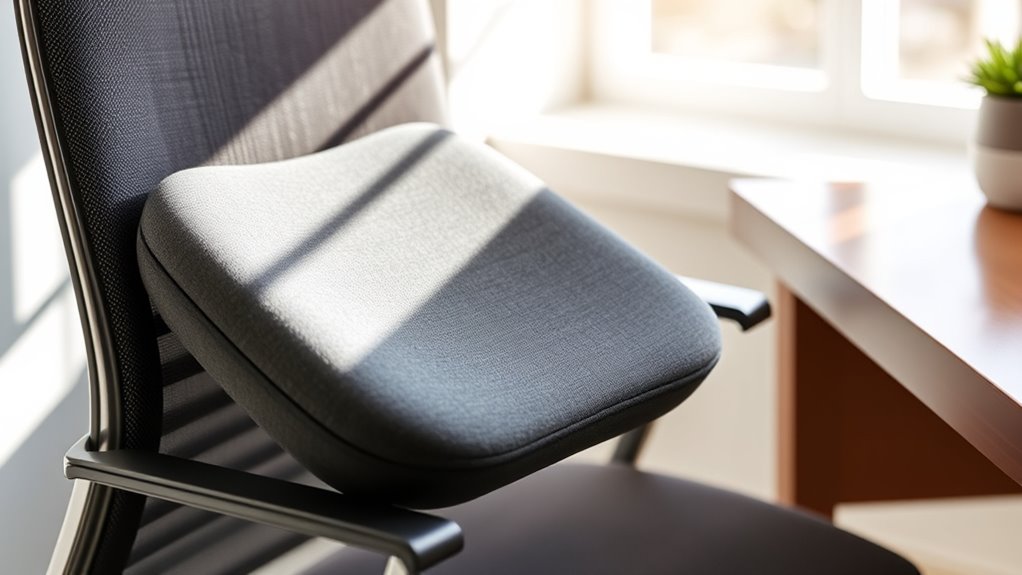

Lumbar support cushions can substantially improve your posture by providing targeted, ergonomic support to your lower back during long periods of sitting. They help align your spine naturally, reduce slouching, and ease back pain caused by poor habits. When designed well, they fit comfortably and sustain your support over time. Using one regularly encourages better sitting habits and helps prevent future back issues. Keep exploring how to optimize your posture with the right support solutions.
Key Takeaways
- Lumbar support cushions promote proper spinal alignment and encourage good sitting habits.
- They provide targeted support to the lower back, reducing slouching and strain.
- Ergonomic designs ensure a comfortable fit, actively improving posture during prolonged sitting.
- High-quality, durable materials maintain support and shape over time, ensuring lasting posture benefits.
- Regular use of lumbar cushions can help prevent future back issues and improve overall back health.
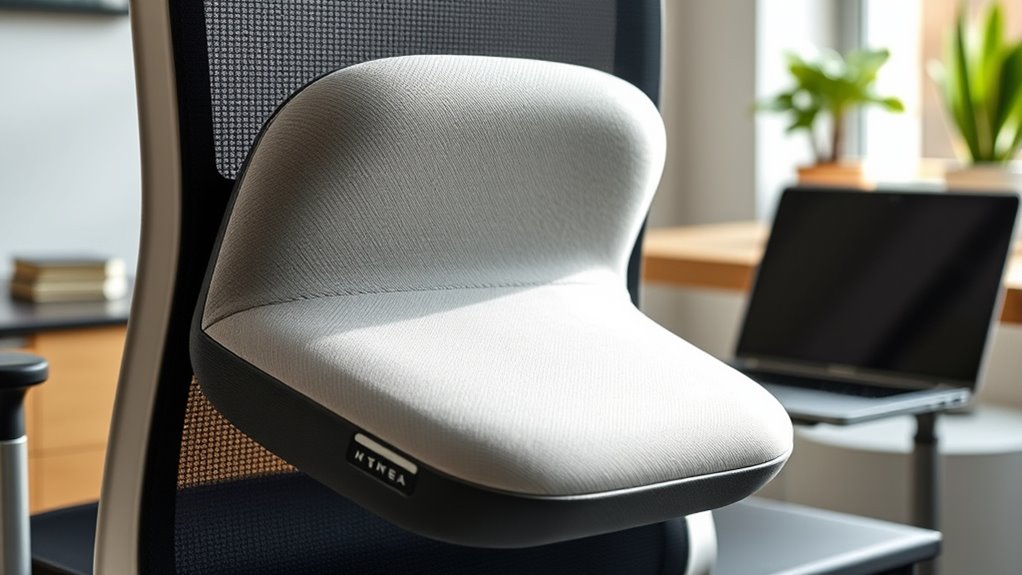
If you spend long hours sitting, lumbar support cushions can make a significant difference in maintaining proper posture and reducing back pain. These cushions are designed to provide targeted support to the lower back, helping you avoid slouching and strain that often results from prolonged sitting. When choosing one, pay close attention to the ergonomic design, as this ensures the cushion fits comfortably against your lumbar curve and promotes natural alignment. An ergonomic design isn’t just about comfort; it actively encourages better sitting habits by supporting your spine’s natural shape. This can be especially helpful if you spend most of your day at a desk, in a car, or in a wheelchair, where maintaining good posture isn’t always intuitive. Additionally, integrating automation technologies into ergonomic products can further enhance their effectiveness by providing adaptive support tailored to individual needs. Material durability is another critical factor when selecting a lumbar support cushion. You want a cushion that can withstand daily use without losing its shape or supportive qualities. High-quality materials like memory foam or dense foam cores tend to offer excellent durability because they mold to your back over time, providing consistent support. These materials are resilient, resisting compression and deformation even after months of regular use. The outer cover should also be durable, ideally made from tough, breathable fabrics that resist wear and tear, while still remaining comfortable against your skin. Investing in a cushion with durable material ensures long-term value, saving you money and the inconvenience of replacing worn-out supports frequently. Comfort is closely tied to both ergonomic design and material durability. A well-designed cushion will contour to your lower back, reducing pressure points and preventing discomfort during extended periods of sitting. Durable materials maintain this supportive shape over time, ensuring you don’t need to constantly readjust or replace the cushion. When these elements come together—ergonomic design and durable material—you get a product that’s both effective and long-lasting. This means you’re more likely to incorporate it into your daily routine and stick with good posture habits. Ultimately, a lumbar support cushion with a thoughtful ergonomic design and high material durability can truly help fix your posture. It’s an investment in your health, providing ongoing support that encourages proper spinal alignment, alleviating back pain, and preventing future issues. By choosing a cushion that prioritizes these aspects, you set yourself up for a more comfortable, healthier sitting experience—whether at work, in the car, or relaxing at home.
Top picks for "lumbar support cushion"
Open Amazon search results for this keyword.
As an affiliate, we earn on qualifying purchases.
Frequently Asked Questions
Are Lumbar Cushions Suitable for All Chair Types?
Lumbar cushions are suitable for most chair types because of their ergonomic design and material durability. You can easily attach them to office chairs, car seats, or home furniture, providing consistent lower back support. Just verify the cushion’s size and shape match your chair’s contours for maximum comfort. With durable materials, they’ll last through daily use, helping you maintain proper posture no matter what chair you’re using.
How Long Does It Take to See Posture Improvements?
You might notice posture improvements within a few days to weeks of using a lumbar support cushion. For example, someone practicing proper adjustment techniques, like positioning the cushion correctly and maintaining ergonomic benefits, often sees quicker results. Consistency is key; regular use and mindful sitting habits help your body adapt faster. Keep adjusting your cushion until it fits comfortably, and you’ll likely experience better posture sooner rather than later.
Can Lumbar Cushions Prevent Back Pain Entirely?
Lumbar cushions can’t prevent back pain entirely, but they considerably reduce your risk by promoting proper spinal alignment. With ergonomic design and supportive cushion material, they help maintain good posture during long sitting periods. However, combining a lumbar cushion with regular movement, stretching, and proper ergonomics offers the best protection against back pain. Remember, no single solution works perfectly—consistency and good habits are key.
Are There Specific Cushions for Different Body Sizes?
Think of lumbar cushions as tailored suits for your back—they come in different sizes to fit your unique shape. You should look for ones with ergonomic design, ensuring support aligns perfectly with your spine, and check material durability so they last through daily use. Whether you’re petite or tall, choosing a cushion suited to your body size helps maximize comfort and support, making your sitting experience feel like a custom fit.
How Often Should I Replace My Lumbar Support Cushion?
You should replace your lumbar support cushion every 1-2 years, depending on foam durability and wear. Over time, foam compresses and loses its supportive properties, even if it has an ergonomic design. Regularly check for signs of sagging, tears, or reduced comfort. If you notice these issues, it’s time to get a new cushion to guarantee proper support and maintain good posture while sitting.
Conclusion
Using a lumbar support cushion can help improve your posture, reduce discomfort, and boost your confidence. It encourages proper alignment, alleviates pain, and promotes healthier habits. When you invest in your comfort, you invest in your well-being. Stand taller, sit straighter, and feel stronger every day. Because your posture matters, and with the right support, you can truly transform the way you sit, stand, and live. Take control—your back will thank you.