If you wear bifocals or progressive lenses, you need to adjust your monitor setup to see clearly and stay comfortable. Raise or lower your screen so the top aligns with your eye level, and position it about an arm’s length away. This helps your eyes shift seamlessly between different lens zones, reducing neck strain and blurriness. Proper positioning is key—keep reading to discover important tips for optimizing your workspace.

Get comfort and recovery gear delivered free with Prime
- Fast, free delivery on millions of items
- Prime Video, Amazon Music and more included
- Member-only deals all year
Key Takeaways
- Adjust monitor height to align with the intermediate zone of bifocals or progressives for comfortable viewing.
- Position the monitor perpendicular to windows to minimize reflections and glare affecting multiple focal zones.
- Use an ergonomic chair and proper posture to support neck and eye comfort with multifocal lenses.
- Maintain a proper distance of about an arm’s length to reduce strain across different lens segments.
- Take regular breaks and focus on distant objects to relieve eye fatigue caused by multifocal lens viewing zones.
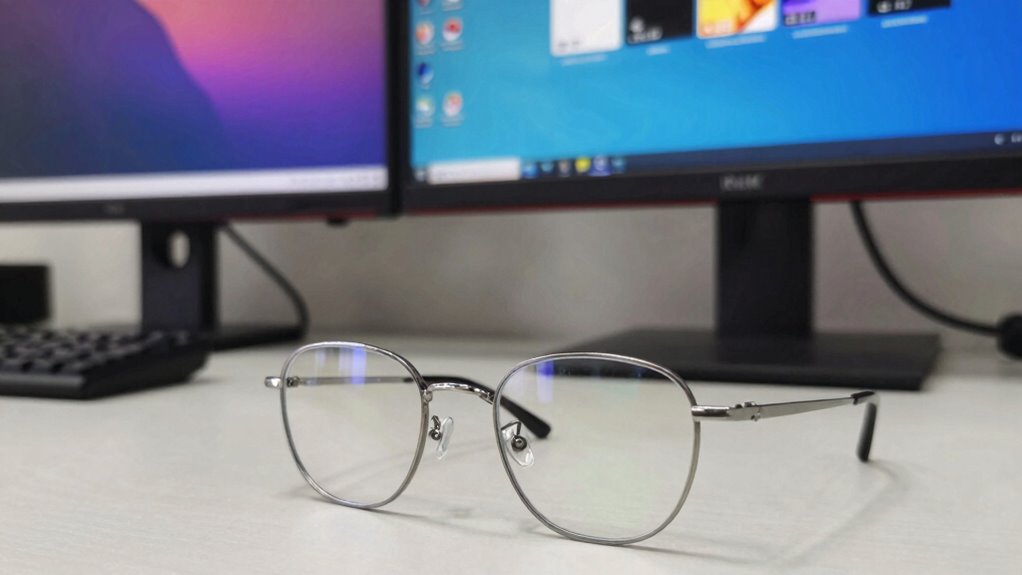
If you wear bifocals or progressive lenses, your monitor setup might need to change to prevent eye strain and guarantee clear vision. These lenses are designed to help you see at multiple distances, but they can also create challenges when working at a computer. To maximize comfort and protect your eyes, you’ll need to focus on maintaining an ergonomic posture and minimizing screen glare. Proper positioning is key because your lenses require different viewing angles, and poor setup can cause neck strain, headaches, or blurred vision.
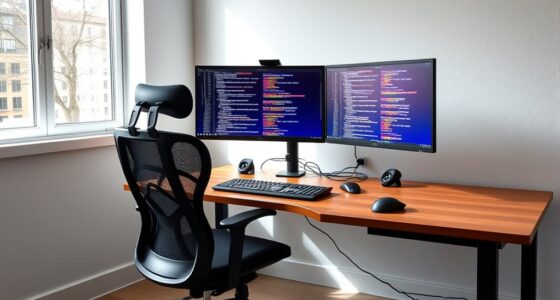
Start by adjusting your monitor height so that the top of the screen is roughly at your eye level. This allows you to keep your head in a neutral position, reducing the need to tilt or crane your neck, which is essential for maintaining an ergonomic posture. When using bifocals or progressives, you should look slightly downward to view the screen comfortably, so elevating the monitor ensures you’re not forced into an awkward angle. Keep the screen about an arm’s length away to avoid straining your eyes, but also ensure you can see clearly without leaning forward or squinting.
Adjust monitor height to eye level for a neutral head position and clear, comfortable viewing with bifocals or progressives.
Screen glare is another common issue for those with bifocals or progressive lenses. Reflections from windows or overhead lights can make it difficult to see the screen clearly and cause eye fatigue. To combat this, position your monitor to avoid direct reflections—try placing it perpendicular to windows or using curtains and blinds. Additionally, consider an anti-glare screen filter or adjusting the brightness and contrast settings on your monitor to reduce eye strain. Incorporating proper screen placement can significantly improve your overall comfort and reduce glare-related issues. Also, choosing a comfortable workspace that supports good posture can help prevent muscle tension and fatigue.
Your workspace should support your natural viewing habits. Use an adjustable chair that promotes good ergonomic posture, keeping your feet flat on the floor and your back supported. Sit upright with your shoulders relaxed, and keep your wrists in a neutral position when typing. This setup not only helps prevent musculoskeletal issues but also ensures your lenses work effectively by allowing you to maintain the proper head and eye position. Also, be aware that eye strain can be exacerbated by improper monitor placement, especially for those with multifocal lenses.
Incorporate regular breaks into your routine. Every 20 minutes, look away from your screen for at least 20 seconds, focusing on something at a distance. This practice helps relax your eye muscles and reduces fatigue caused by prolonged close-up work. By fine-tuning your monitor setup and adopting good ergonomic habits, you’ll find it easier to work comfortably with bifocals or progressive lenses, maintaining clear vision while minimizing discomfort.
Products Worth Considering

BowFlex SelectTech 840 Adjustable Kettlebell

BowFlex Results Series 552 SelectTech Adjustable Dumbbell

BowFlex Results Series SelectTech Adjustable Dumbbells (Pair)
As an affiliate, we earn on qualifying purchases.
Frequently Asked Questions
Do Bifocals or Progressives Provide Better Vision for Computer Work?
Progressive lenses generally offer better vision for computer work because they provide a smooth shift between distances, reducing the need to tilt your head or reposition your monitor. Lens adaptation might take some time, but it enhances eye comfort and minimizes strain. Bifocals, with their distinct lines, can cause abrupt shifts, making prolonged computer use more uncomfortable. Overall, progressives promote better eye comfort and easier adaptation for extended screen time.
How Should My Monitor Be Positioned for Optimal Eyewear Use?
Imagine aligning your monitor like a lighthouse guiding ships safely ashore. Position your screen about an arm’s length away and slightly below eye level to optimize desk ergonomics. This setup reduces strain and minimizes screen glare, letting your lenses work seamlessly. Adjust the tilt to prevent reflections and make certain of comfortable viewing angles, so your eyewear complements your workspace, keeping your vision clear and your focus sharp throughout the day.
Are There Specific Lenses Better Suited for Digital Screen Use?
Yes, specific lenses are better suited for digital screen use. Look for lenses with anti-reflective coatings to reduce glare and eye strain. Progressive lenses often work well, but choose frame styles that keep the lenses aligned with your eyes for comfort. Consider lenses designed for computer work, like occupational lenses, which offer a wider intermediate zone, making it easier to view screens comfortably and reduce fatigue during long hours.
How Often Should I Get My Vision Checked if Using These Lenses?
You should get your vision checked every six to twelve months—your eyes are more delicate than the most fragile glass! Regular check-ups help guarantee your lenses stay durable and effective, preventing eye fatigue and maintaining ideal vision. Even if your lenses seem fine, periodic exams catch subtle changes early. This way, you avoid unnecessary strain and keep your eyesight sharp, making every screen session as comfortable as possible.
Can These Lenses Help Reduce Eye Strain From Prolonged Screen Time?
Yes, bifocals and progressive lenses can help reduce eye strain from prolonged screen time. They often include blue light filtering features that protect your eyes from harmful rays. By improving focus at various distances, these lenses can decrease eye fatigue and discomfort during extended computer use. Make sure to choose lenses with blue light protection, and take regular breaks to further minimize eye strain and maintain eye health.
Conclusion
Whether you wear bifocals or progressive lenses, adjusting your monitor setup is key to reducing eye strain. Did you know that over 80% of people experience digital eye strain at some point? By positioning your screen correctly and considering your lenses’ focal zones, you can make a big difference. Take the time to optimize your workspace—your eyes will thank you, and you’ll work more comfortably all day long.