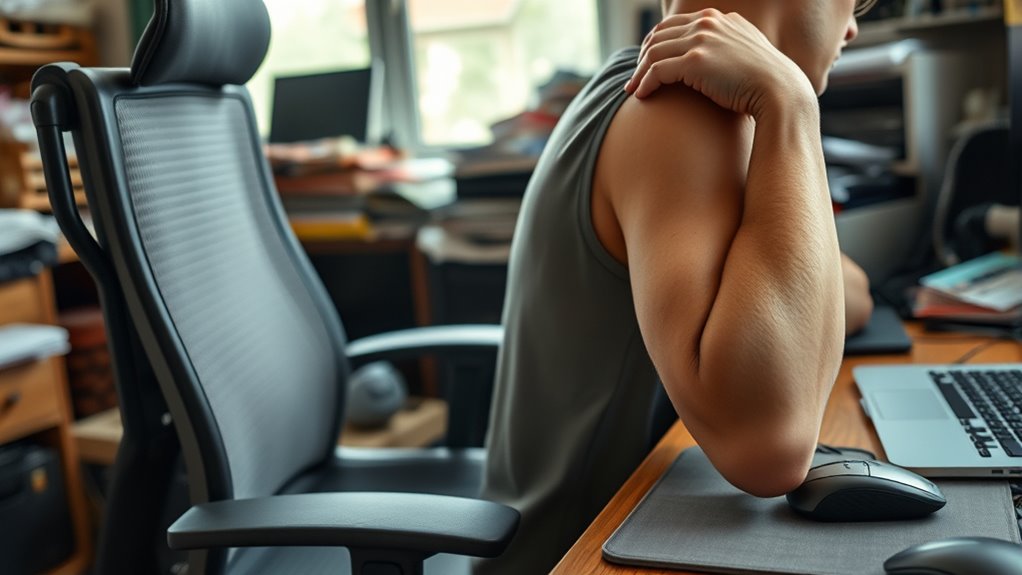
Poor ergonomics in your workspace can lead to health issues like carpal tunnel, tendinitis, and chronic back pain, which may cause long-term injuries. These problems decrease your productivity by making tasks harder and increasing discomfort, leading to more sick days and medical expenses. Over time, ignoring ergonomic setups can cost both your health and your organization money. Staying informed about the impact of bad ergonomics will help you make smarter changes that benefit your well-being and work efficiency.
Key Takeaways
- Poor ergonomics increase injury risk, leading to higher medical costs and long-term health issues for employees.
- Discomfort and pain from bad ergonomics decrease productivity and focus, affecting overall work efficiency.
- Ergonomic problems cause more absenteeism, resulting in lost work hours and decreased organizational output.
- Organizations face higher workers’ compensation claims and medical expenses due to ergonomic-related injuries.
- Investing in ergonomic solutions reduces long-term costs by preventing injuries and promoting employee well-being.
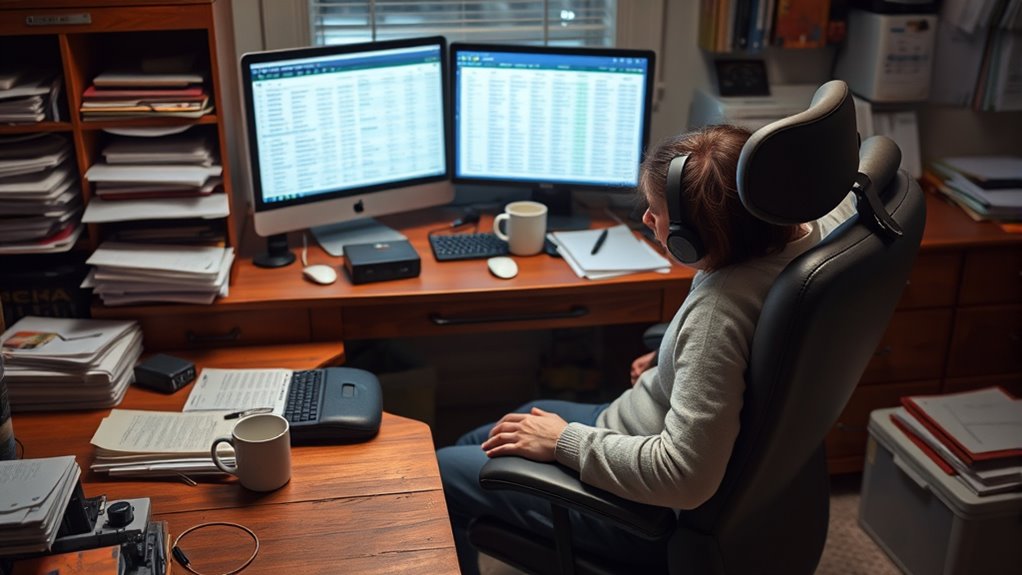
Poor ergonomics in the workplace might seem like a minor issue, but it can lead to serious costs that affect both your health and your company’s bottom line. When your workspace isn’t set up properly, you’re more likely to experience ergonomic injuries that develop over time. These injuries, such as carpal tunnel syndrome, tendinitis, or lower back pain, can be debilitating if left unaddressed. You might notice discomfort or persistent pain that worsens with continued work, which can considerably reduce your productivity. Workplace discomfort isn’t just an annoyance; it’s a clear sign that your body is under strain from poor ergonomic practices. Ignoring these warning signs can lead to long-term health issues, increased absenteeism, and higher medical costs for both you and your employer.
Poor ergonomics can cause long-term health issues and reduce productivity if left unaddressed.
When ergonomic injuries occur, they often stem from improper chair height, poorly positioned monitors, or repetitive motions without adequate breaks. These issues contribute directly to discomfort, making it harder to concentrate or perform tasks efficiently. If you’re frequently adjusting your posture or experiencing aches, it’s a strong indicator that your workspace isn’t supporting your body’s natural needs. Over time, this discomfort can escalate into more serious injuries, which might require medical intervention or time away from work. For your organization, these injuries translate into increased workers’ compensation claims, lost work hours, and decreased overall productivity. The financial impact can be substantial, especially if ergonomic issues aren’t addressed early. Additionally, understanding the importance of ergonomic design can help prevent many of these issues in the first place.
Investing in proper ergonomic setups isn’t just about preventing injuries; it’s also about fostering a healthier, more comfortable work environment. When your workstation promotes good posture and reduces strain, you’ll notice less workplace discomfort. This, in turn, helps you stay focused and energized throughout your shift. Simple adjustments like an adjustable chair, monitor risers, or ergonomic keyboards can make a substantial difference. Educating yourself about proper ergonomics and advocating for ergonomic equipment demonstrates a proactive approach to your health and productivity. Employers that prioritize ergonomic safety often experience fewer ergonomic injuries, less workplace discomfort, and a more motivated workforce.
In the end, poor ergonomics isn’t just about minor aches—it’s about the long-term costs to your well-being and your company’s success. Addressing ergonomic risks today means fewer injuries tomorrow, improved productivity, and a healthier work environment. Taking steps to improve your ergonomic setup is an investment in your health and your career, helping you avoid the pain and costs associated with neglecting workplace ergonomics.
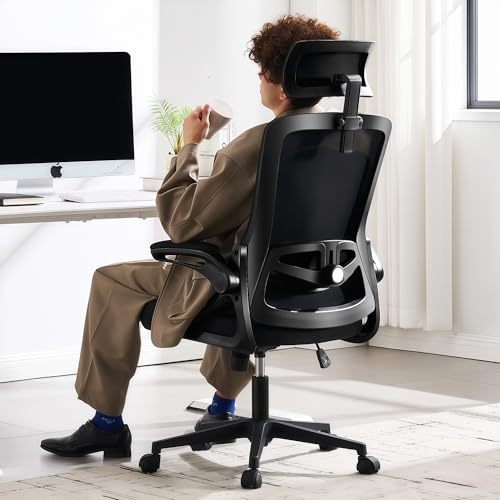
Fizzin Ergonomic Office Chair, 400 LBS Computer Chairs with Adjustable Lumbar Support, Breathable Mesh Desk Chair Ergonomic with Thickened Cushion, Comfy Home Office Desk Chair (Black)
Ergonomic Office Chair: Our ergonomic office chair provides total comfort and support for your head, back, hips and…
As an affiliate, we earn on qualifying purchases.
As an affiliate, we earn on qualifying purchases.
Frequently Asked Questions
How Can Small Office Setups Improve Ergonomics Cost-Effectively?
You can improve your small office setup by investing in ergonomic accessories like adjustable chairs, keyboard trays, and monitor stands. These items promote better posture and reduce strain without breaking the bank. Additionally, customize your workspace by arranging your equipment for maximum comfort and accessibility. Small changes like these make a significant difference, boosting productivity and health while keeping costs manageable.
What Are Early Signs of Ergonomic-Related Health Issues?
You might notice early signs of ergonomic-related health issues through posture awareness. If you feel persistent neck, shoulder, or back pain, it could be due to poor posture or repetitive strain. Soreness or tingling in your arms or hands may also indicate strain from repetitive movements. Pay attention to these signals and adjust your workstation to prevent further discomfort or injury, ensuring better long-term health and productivity.
How Does Ergonomic Training Impact Long-Term Productivity?
Ergonomic training greatly boosts your long-term productivity by teaching you proper posture, workstation setup, and movement habits. When you apply this knowledge daily, you reduce the risk of discomfort and injury, which helps you stay focused and efficient over time. Investing in ergonomic training guarantees you develop habits that support your health and work performance, leading to sustained productivity and fewer work-related health issues in the future.
Are There Industry-Specific Ergonomic Standards I Should Follow?
Think of your workspace like a ship steering through different waters; each industry has its unique currents and weather. You should follow specific industry standards and compliance guidelines to keep your vessel steady. For example, office settings may have different ergonomic needs than manufacturing plants. By adhering to these standards, you guarantee safety and efficiency, helping your team stay productive and healthy on their journey.
What Are the Most Overlooked Ergonomic Hazards in the Workplace?
You often overlook ergonomic hazards like muscle strain from poor posture and repetitive motion injuries. These issues happen when you repeat the same tasks without proper breaks or ergonomic setups. To prevent them, adjust your workspace, take regular breaks, and vary your movements. Addressing these hazards early can reduce discomfort, prevent long-term injuries, and boost your overall productivity and health at work.
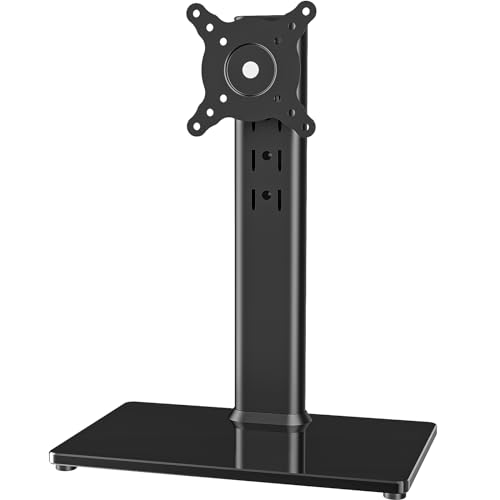
Single LCD Computer Monitor Free-Standing Desk Stand Mount Riser for 13 inch to 32 inch screen with Swivel, Height Adjustable, Rotation, Vesa Base Stand Holds One (1) Screen up to 77Lbs(HT05B-001))
COMPATIBILITY ☞ Single Computer monitor mount free standing Desk Stand Riser fitting screens for 13,15,17,19,21,23,27,30,32 inch LCD LED…
As an affiliate, we earn on qualifying purchases.
As an affiliate, we earn on qualifying purchases.
Conclusion
Ignoring your workstation’s ergonomics might seem harmless now, but the hidden costs could catch up with you faster than you think. As discomfort grows, so does the risk of long-term health issues and declining productivity. Are you prepared to face the consequences of neglecting this essential aspect of your work environment? Stay vigilant—your health and success depend on it. Don’t wait until pain becomes permanent; act now before it’s too late.

Wireless Keyboard and Mouse Combo, 2.4G Full Size Wave Keys Ergonomic Keyboard with Wrist Rest and 3-Level DPI Adjustable Wireless Ergonomic Mouse for Windows, Mac OS Desktop/Laptop/PC(Black)
【Wave Ergonomic Wireless Keyboard and Mouse Combo】The wireless keyboard features a wave key and wrist rest design that…
As an affiliate, we earn on qualifying purchases.
As an affiliate, we earn on qualifying purchases.

Lumbar Support Pillow for Office Chair, Office Home Essentials,Gifts for Mom,Dad, Back Support Pillow for Car, Chair Cushions,Back Pain Relief Improve Posture,Mesh Cover Double Adjustable Straps
For convenience and durability, we upgraded and lengthened the straps to fit more chairs instead of adding extra…
As an affiliate, we earn on qualifying purchases.
As an affiliate, we earn on qualifying purchases.