
Your wrist pain might not just be about your mouse; it can also stem from how quickly you work. Moving at a frantic pace causes muscle tension and strain, especially with repetitive tasks. Slowing down, taking breaks, and adjusting your posture can make a big difference in reducing discomfort. Mindful pacing prevents overexertion and keeps your muscles relaxed. Keep exploring to discover more simple strategies to protect your wrists and improve your comfort.

Get comfort and recovery gear delivered free with Prime
- Fast, free delivery on millions of items
- Prime Video, Amazon Music and more included
- Member-only deals all year
Key Takeaways
- Rapid work pace increases muscle tension and grip, leading to wrist strain and potential injury.
- Slowing down allows muscles to relax, reducing unnecessary tension and discomfort.
- Maintaining proper posture and ergonomic workspace setup prevents awkward wrist angles during fast work.
- Managing stress and taking breaks with stretches improve circulation and prevent fatigue-related wrist pain.
- Combining mindful pacing with ergonomic adjustments promotes long-term wrist health and prevents chronic issues.
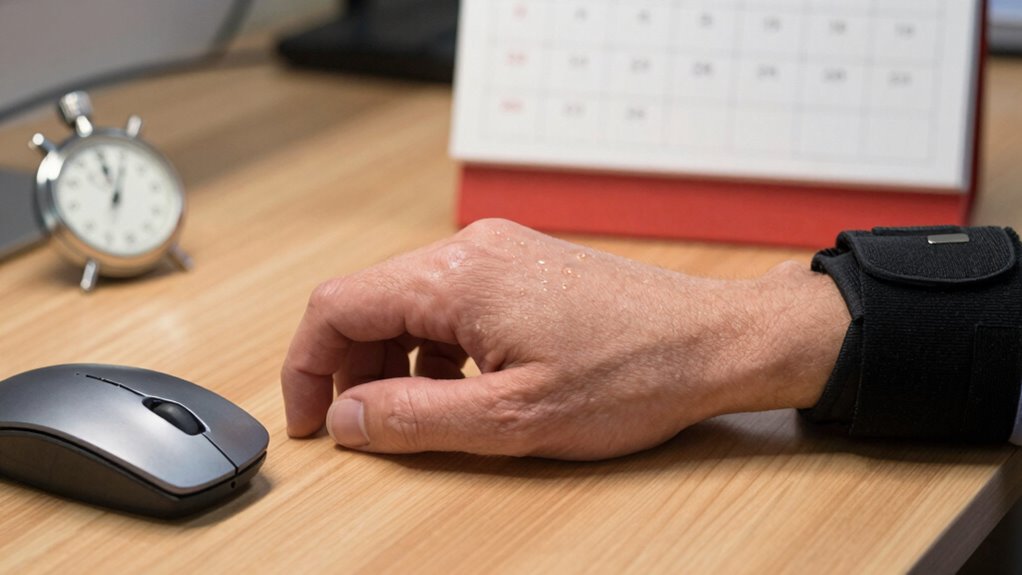
Have you ever blamed your mouse for wrist pain when the real culprit might be how quickly you’re working? It’s a common reaction, but often, the root cause isn’t just the hardware itself. Instead, it’s how you manage your pace and your environment. When you work at a frantic speed, your muscles tense up, your grip tightens, and your wrist bears more strain than it should. That repetitive stress can lead to discomfort or even injury over time. Slowing down your rhythm can make a crucial difference, allowing your muscles to relax and reducing unnecessary strain.
One way to combat this is by making simple ergonomic adjustments to your workspace. Proper positioning of your keyboard and mouse, for example, can prevent awkward angles that force your wrist into unnatural positions. Keep your wrists in a neutral posture—straight and aligned with your forearms—and avoid bending or twisting them during prolonged tasks. Using ergonomic tools like cushioned mouse pads or wrist rests can also provide extra support, easing the pressure on your joints. These small changes don’t just improve comfort; they actively reduce the risk of developing chronic wrist pain.
Ergonomic workspace tweaks and proper wrist positioning can prevent discomfort and reduce wrist pain over time.
Beyond physical setup, managing stress plays a fundamental role. When you’re overwhelmed or anxious, your body naturally tenses up, which can make wrist pain worse. Incorporate stress management techniques into your routine—deep breathing, short breaks, or even quick stretches can help reset your body and mind. Regular breaks are essential; they give your muscles time to recover and prevent fatigue. During these intervals, stretch your hands, wrists, and forearms to promote circulation and flexibility. Effective ergonomic practices can further enhance your workspace, creating a more sustainable and healthy work environment. Additionally, mindful pacing helps you remain aware of your body’s signals and prevents overexertion. The goal isn’t just to work less but to work smarter, paying attention to how your body feels and adjusting accordingly. Additionally, choosing ergonomic tools like adjustable chairs and monitor stands can further support healthy posture and reduce strain.
Your pace influences how your body reacts during work. If you push yourself too hard without pauses or ergonomic support, discomfort becomes inevitable. Conversely, by consciously slowing down and integrating ergonomic adjustments, you create a healthier workflow. Stress management complements this by helping you stay relaxed, preventing tension from building up in your muscles. Over time, these habits can notably reduce wrist pain, making your work sessions more comfortable and sustainable. Remember, it’s not always about the mouse—it’s about how you work and how you care for your body throughout the day.
ergonomic mouse pad with wrist support
As an affiliate, we earn on qualifying purchases.
As an affiliate, we earn on qualifying purchases.
Frequently Asked Questions
Can Wrist Pain Be Caused by Stress or Anxiety?
Yes, wrist pain can be caused by stress or anxiety. Stress-related discomfort and anxiety-induced symptoms often lead to muscle tension, which can tighten your wrists and cause pain. When you’re anxious, you might unconsciously clench your fists or grip objects harder, adding strain. Recognizing these patterns helps you manage stress more effectively, reducing wrist discomfort. Relaxation techniques and proper ergonomic habits can also ease this type of pain.
How Does Sleep Quality Affect Wrist Pain?
Poor sleep quality can considerably worsen wrist pain, with studies showing that sleep disturbances increase pain sensitivity by up to 60%. When your sleep hygiene is poor, or you skip restful routines, your body doesn’t repair tissues effectively. Prioritize consistent sleep schedules, calming routines before bed, and a comfortable environment to reduce wrist discomfort. Better sleep helps your body heal and manage pain more effectively, making your wrists feel more supported and less strained.
Are Certain Sports More Likely to Cause Wrist Issues?
Certain sports, especially those involving repetitive wrist movements like tennis, golf, or gymnastics, are more prone to causing wrist issues. Sports injuries from overuse or improper technique can strain your wrist tendons and ligaments. During athletic training, it’s essential to incorporate proper warm-ups, stretching, and strength exercises to prevent injury. Be mindful of your wrist’s signals, and don’t ignore persistent pain, as it might indicate a need for rest or medical attention.
What Are Early Signs of Wrist Tendinitis?
Did you know that wrist tendinitis affects over 10% of office workers annually? Early signs include pain during wrist movement, tenderness, and swelling, especially after repetitive strain. You might notice a dull ache or stiffness that worsens with activity. If you experience these symptoms, it’s essential to rest your wrist and seek medical advice early. Recognizing tendon inflammation early can prevent worsening and support faster recovery.
When Should I See a Doctor for Wrist Pain?
You should see a doctor for wrist pain if it persists beyond a few days, worsens, or limits your daily activities. Pay attention to wrist biomechanics and note if certain movements trigger pain. Consider ergonomic adjustments to your workspace and avoid repetitive strain. If these changes don’t help or if you experience numbness, tingling, or weakness, seek medical advice promptly to prevent further injury and get proper treatment.
As an affiliate, we earn on qualifying purchases.
Conclusion
Your wrist pain isn’t just a stubborn knot to untangle; it’s a sign your rhythm might be off. Like a song out of sync, your pace can throw your body into dissonance, leading to discomfort. Take a moment to listen to your body’s cues and adjust your tempo. When you find your natural beat, you’ll move through your day smoother, with less pain and more harmony. Remember, sometimes slowing down is the fastest way forward.
As an affiliate, we earn on qualifying purchases.
ergonomic office chair with lumbar support
As an affiliate, we earn on qualifying purchases.
As an affiliate, we earn on qualifying purchases.
Halloween Picks
halloween
As an affiliate, we earn on qualifying purchases.