TL;DR

Get comfort and recovery gear delivered free with Prime
- Fast, free delivery on millions of items
- Prime Video, Amazon Music and more included
- Member-only deals all year
A Fit&Well personal report says its author’s mid-back pain improved after nine days of doing offset child’s pose, practiced daily for two weeks. The account is an individual experience, not evidence that the stretch will relieve pain for other people; a physical therapist advises against forcing the position.
A Fit&Well writer says their mid-back pain was almost gone after nine days of practicing offset child’s pose during a two-week personal test. The account describes one person’s experience, not a clinical study, so it cannot establish that the stretch caused the improvement or that it will work for others.
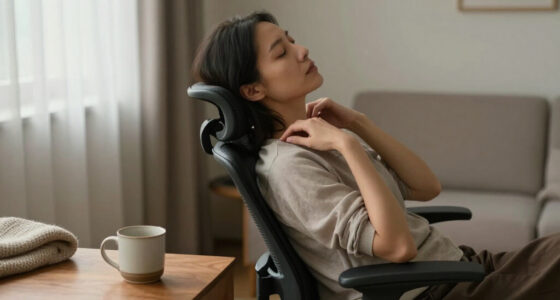
The author, who identifies as a certified personal trainer, said they had been experiencing nagging mid-back pain that flared when lifting their toddler-aged son. They chose offset child’s pose because it was gentle and easy to perform, and tried it to see whether it affected their symptoms.
The routine began with 30 seconds on each side, twice a day. After several days, the author increased the holds to 45 seconds, then to 60 seconds during the final three days. They reduced practice to once daily after their back began feeling better around the midpoint. They reported that pain was “pretty much gone” after nine days and said sitting, carrying their child and doing chest presses felt easier.
Physical therapist Dr. Michael Nula said the stretch lengthens muscles along the mid and lower back while allowing the hips and knees to move through a comfortable range. He said it can help relieve muscle tension and unload joint compression. Nula cautioned against forcing the pose and suggested using a pillow if the hips do not comfortably reach the heels.
A Personal Result, Not a Trial
The report offers a specific example of how one person incorporated a short mobility exercise into daily life and tracked changes in comfort and movement. That may be useful to readers considering gentle stretching, especially because the routine required 30 to 60 seconds per side rather than a lengthy workout.
But the result should not be read as proof that the pose treats mid-back pain. The report provides no comparison group, clinical assessment, standardized pain measurements or evidence separating the stretch’s effect from other possible influences. The author’s improvement is self-reported and individual; it does not show how often the stretch helps, who is likely to benefit, or whether it is appropriate for a particular injury or condition.
Products Worth Considering

Fitbit Sense Health & Fitness Smartwatch (White/Gold, International Version)

Levoit Vital 100S-P Air Purifier with Washable Pre-Filter

Levoit Core 300S-P Smart WiFi Air Purifier
As an affiliate, we earn on qualifying purchases.
How the Stretch Was Practiced
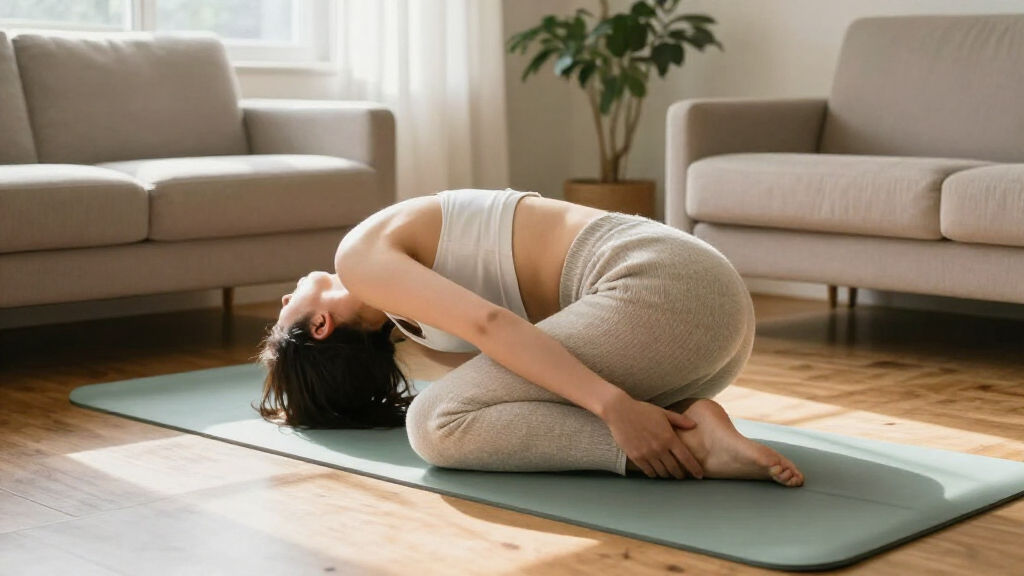
Offset child’s pose starts on hands and knees. The practitioner widens the knees, brings the toes together and moves the hips back toward the heels, then reaches both arms to one side and holds before repeating on the other. In the reported routine, each side was held for 30 to 60 seconds. The writer gradually increased the duration as the pose became more comfortable.
Nula’s guidance in the report was to keep the movement comfortable rather than push into pain or force the hips down. He suggested placing a pillow where needed so the position accommodates the person’s range of motion. The source also advises people with certain medical conditions or injuries to avoid the pose or consult a physician if they have concerns. It does not specify which conditions require avoiding it.
What One Account Cannot Show
The report does not establish that the stretch alone produced the improvement. It does not provide a formal diagnosis, pain scores taken over time, details about other changes the author made, or follow-up showing whether the symptoms stayed improved. The author also does not report whether a clinician evaluated the pain.
It remains unclear whether the outcome would be similar for other people or for people whose back pain has a different cause. The source notes that some injuries or medical conditions may make the pose unsuitable, but does not identify them. Readers with persistent, worsening or concerning pain should not treat this personal report as a substitute for individualized medical advice.
The Writer Plans Regular Practice
The author said they intended to keep offset child’s pose in their routine, aiming to practice it several times a week, although they acknowledged they might not maintain it daily. The report does not describe a longer follow-up or say whether the improvement continued after the two-week test.
For readers interested in trying the movement, the account’s practical guidance is to begin with a comfortable hold, avoid forcing the hips or shoulders, and use support such as a pillow if needed. Anyone with an injury, a relevant medical condition or uncertainty about whether the pose is safe for them should seek guidance from a qualified health professional.
Key Questions
What stretch did the Fit&Well writer try?
The writer practiced offset child’s pose, reaching both arms to one side while seated back toward the heels, then repeating on the other side.
How often and how long did they do it?
They began with 30 seconds per side twice a day, gradually increasing the holds to 60 seconds. After their back began feeling better, they reduced the routine to once a day.
Did the report prove the stretch fixes mid-back pain?
No. It describes one person’s self-reported experience and does not establish that the stretch caused the improvement or that it will help other people.
Should people push through discomfort in the pose?
No. Physical therapist Michael Nula cautioned against forcing the stretch and suggested using a pillow if the hips do not comfortably reach the heels. People with injuries or medical conditions should seek professional advice if unsure whether the pose is suitable.
Source: fitandwell.com