Your evening habits, like scrolling social media or binge-watching, expose you to blue light that suppresses melatonin, making it harder to fall asleep. Using bright screens and staying active late can disrupt your circadian rhythm, leading to tiredness and reduced focus the next day. Setting a calming bedtime routine, limiting screen time, and adjusting lighting can support better sleep. Keep going to discover how small changes can improve your next-day performance.

Get comfort and recovery gear delivered free with Prime
- Fast, free delivery on millions of items
- Prime Video, Amazon Music and more included
- Member-only deals all year
Key Takeaways
- Using electronic devices before bed suppresses melatonin, delaying sleep and reducing alertness the next day.
- Bright or blue light exposure in the evening disrupts circadian rhythms, impairing sleep quality.
- Poor sleep hygiene, like late caffeine or heavy meals, can cause discomfort and fatigue during work hours.
- An inconsistent bedtime and lack of calming routines hinder restful sleep, affecting productivity.
- An environment with improper lighting and noise can prevent deep sleep, leading to decreased focus and efficiency.
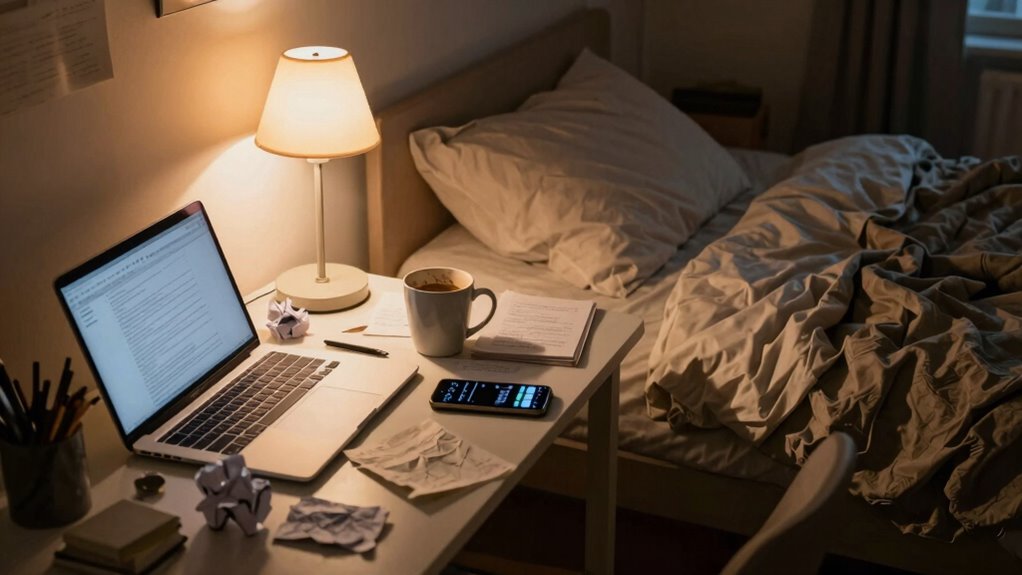
One of the biggest culprits is evening distractions. As the day winds down, it’s tempting to scroll through social media, binge-watch shows, or play on your phone. While these activities may feel relaxing in the moment, they often emit blue light, which suppresses melatonin—the hormone that signals your body it’s time to sleep. This delay in melatonin production can throw off your circadian rhythm and extend the time it takes for you to fall asleep. Over time, this disrupts sleep patterns, leaving you tired and less alert the next day.
To improve your sleep hygiene, you need to set boundaries around evening distractions. Make a conscious effort to turn off electronic devices at least an hour before bed. Instead, opt for calming activities like reading a book, gentle stretching, or practicing deep breathing exercises. These habits signal to your brain that it’s time to wind down, helping you fall asleep faster and enjoy more restorative sleep. Establishing a consistent bedtime also reinforces your body’s internal clock, making it easier to wake up feeling refreshed. Limiting evening light exposure can further support your natural sleep cycle and enhance your ability to fall asleep peacefully. Additionally, understanding the importance of light regulation can help you create an environment that promotes relaxation and prepares your body for sleep.
Furthermore, color accuracy in your environment—such as using warm lighting—can help signal your brain that it’s time to relax, further supporting your sleep routine. Creating a sleep-friendly environment is equally important. Keep your bedroom cool, dark, and quiet. Invest in a comfortable mattress and pillows that support restful sleep. Avoid heavy meals or caffeine late in the evening, as these can cause discomfort or interfere with your ability to fall asleep. Incorporating elements of sound healing science, such as gentle calming sounds or frequencies, can also promote relaxation and improve sleep quality. Prioritize your sleep hygiene by developing a routine that minimizes evening distractions and promotes relaxation. When you do this, you’re not just improving your sleep—you’re setting yourself up for a successful, productive tomorrow. Your evening habits have the power to either set you up for success or silently sabotage your next day’s performance. Choose wisely.
Products Worth Considering

Bowflex SelectTech 840 Adjustable Kettlebell

BowFlex Results Series SelectTech Adjustable Dumbbells, Pair

Garmin Venu 3 Fitness Smartwatch, 45 mm, Black
As an affiliate, we earn on qualifying purchases.
Frequently Asked Questions
How Does Screen Time Before Bed Affect Next Day Productivity?
Exposing yourself to blue light before bed can disrupt your sleep, making it harder to fall asleep and stay rested. This sleep disruption leaves you groggy and less focused the next day, reducing your productivity. When you spend too much time on screens at night, your brain struggles to wind down, which can impair memory, decision-making, and energy levels. Limiting screen time before bed helps you wake up refreshed and ready to work.
Can Late-Night Snacking Impact Morning Alertness?
Late-night snacking can disrupt your sleep, leading to sleep disruption and affecting your morning alertness. The metabolic effects of eating late can cause discomfort, indigestion, or spikes in blood sugar, which make it harder to fall asleep or stay asleep. As a result, you wake up feeling groggy and less focused. To stay alert tomorrow, avoid heavy or sugary snacks close to bedtime, promoting better sleep and improved morning energy.
What’s the Best Way to Wind Down Quickly in the Evening?
To wind down quickly, try incorporating relaxation techniques like deep breathing or progressive muscle relaxation. Establish a consistent bedtime ritual, such as reading a book or listening to calming music, to signal your body it’s time to relax. Avoid screens and caffeine at least an hour before bed. These habits help calm your mind and prepare you for restful sleep, ensuring you’re refreshed and alert for tomorrow’s workday.
Does Exercising Late at Night Interfere With Sleep Quality?
Exercising late at night can be a real game-changer for your sleep. It often causes sleep disruption and hormonal imbalance, making it hard to fall asleep or stay rested. The adrenaline boost from late workouts can keep you wired, ruining your chances for quality sleep. To avoid this, try finishing intense exercise at least three hours before bed. That way, your body has time to wind down and balance those hormones.
How Does Mood Before Bed Influence Work Performance?
Your mood before bed directly influences your work performance. If you go to sleep feeling anxious or stressed, it can hinder your ability to recall dreams, affecting your bedtime rituals and overall rest quality. A positive mood promotes better sleep and dream recall, helping you wake up refreshed and ready. Cultivating calming bedtime rituals can improve your mood, enhance sleep, and boost your performance the next day.
Conclusion
So, next time you wind down, think twice. Small choices tonight could secretly sabotage your tomorrow’s success. Are you unknowingly setting yourself up for a rough day ahead? The truth is, tiny tweaks to your evening routine might be the key to discovering better mornings. But what if the secret to a perfect tomorrow is hidden in your tonight? Stay tuned — what you do tonight could change everything.