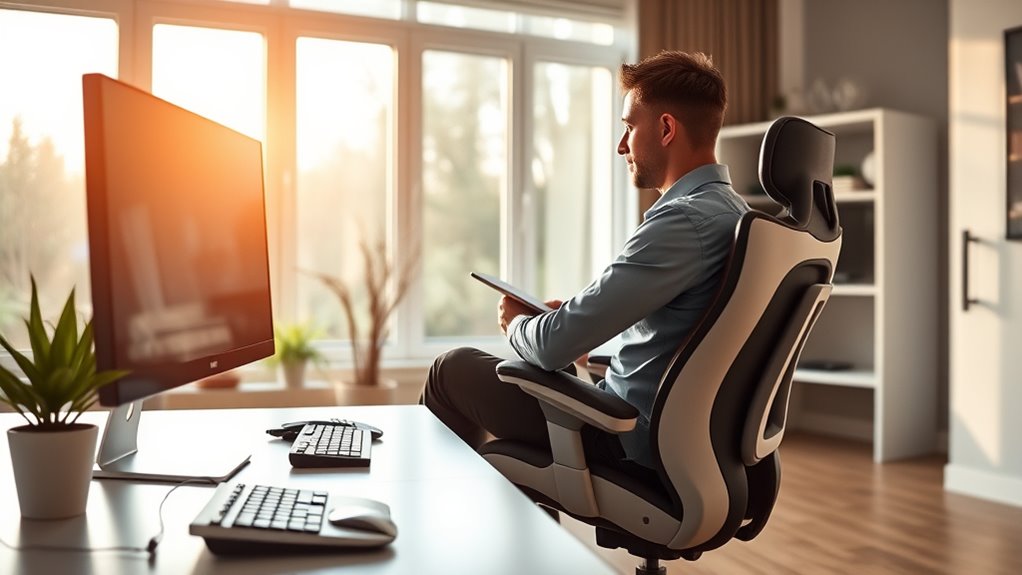

Proper ergonomics play a key role in your comfort and focus by creating a workspace that supports your body and minimizes discomfort. When your chair, monitor, and accessories are adjusted to your needs, you reduce physical strain on your neck, shoulders, and back. This setup helps you stay alert and mentally clear for longer periods. Keep going to discover how making simple ergonomic changes can boost your productivity and well-being even more.

Get comfort and recovery gear delivered free with Prime
- Fast, free delivery on millions of items
- Prime Video, Amazon Music and more included
- Member-only deals all year
Key Takeaways
- Ergonomic setups reduce physical discomfort, allowing for sustained focus during work sessions.
- Proper posture supports better blood flow and oxygen to the brain, enhancing mental clarity.
- Customizing workspace elements minimizes distractions caused by discomfort or awkward positioning.
- Ergonomic principles help prevent musculoskeletal issues that could impair concentration over time.
- An environment designed for comfort boosts motivation, enabling longer periods of alertness and productivity.

Have you ever wondered how your workspace impacts your ability to concentrate? The way you set up your environment can profoundly influence your focus and productivity. When your workspace is tailored to support your body and work habits, you’re more likely to stay engaged and avoid distractions. One of the key factors in creating an effective workspace is posture improvement. When you sit in a position that aligns your spine, reduces strain on your neck and shoulders, and supports your lower back, you naturally feel more comfortable. This comfort minimizes physical discomfort, which can otherwise drain your attention and cause you to lose focus. Proper posture not only prevents pain but also enhances blood flow and oxygen to your brain, helping you stay alert and sharp over longer periods.
Workspace customization plays a vital role here. Instead of sticking to a generic desk setup, you should personalize your space to fit your specific needs. This might mean adjusting your chair height so your feet are flat on the floor and your knees are at a 90-degree angle, or positioning your monitor at eye level to avoid neck strain. When your workspace is customized to your height, work style, and preferences, you eliminate unnecessary movements and discomfort that could break your concentration. Small adjustments, like placing frequently used items within arm’s reach or ensuring adequate lighting, can make a big difference in how seamlessly you work. The goal is to create an environment that feels natural and supports your body’s needs, so you’re not fighting against discomfort or awkward positioning. Additionally, ergonomic principles can guide you in designing a workspace that promotes sustained focus and well-being over time.
As an affiliate, we earn on qualifying purchases.
Frequently Asked Questions
How Quickly Can Ergonomic Changes Improve Concentration?
You can notice concentration enhancement within days of making ergonomic adaptations. Small changes like adjusting your chair height or monitor position often lead to quick improvements. Your body responds rapidly to better support, reducing discomfort and distractions. As a result, your focus sharpens, and productivity increases. Consistent ergonomic adaptation creates an environment that promotes sustained concentration, making it easier to stay engaged and perform well in your tasks.
Are There Specific Ergonomic Tools for Different Work Types?
Yes, there are specific ergonomic tools for different work types. For example, adjustable chairs help with long hours at a desk, while desk accessories like wrist supports and monitor stands support your posture. If you’re doing detailed work, an ergonomic magnifier or a sit-stand desk can enhance comfort and focus. Tailoring your tools to your tasks ensures you stay comfortable and productive throughout your workday.
Can Poor Ergonomics Cause Long-Term Health Issues?
Poor ergonomics is like neglecting your body’s blueprint, risking long-term health issues. Without posture awareness and ergonomic education, you may develop chronic pain, joint problems, or even nerve damage over time. Think of your body as a finely-tuned machine—ignoring proper setup can cause it to wear out prematurely. Prioritize ergonomic tools and knowledge to protect your health, ensuring you stay strong and pain-free for years to come.
How Do Ergonomic Habits Influence Mental Well-Being?
Your ergonomic habits directly influence your mental well-being by reducing stress and preventing discomfort, allowing you to stay focused and positive. Incorporate mindfulness practices to enhance body awareness and break away from ergonomic myths that may cause unnecessary worry. Good habits promote better mood, reduce fatigue, and improve overall mental health, making work and daily activities more enjoyable. Prioritize ergonomic practices to support your mental resilience and well-being.
What Are Cost-Effective Ergonomic Adjustments for Home Offices?
In the spirit of the Renaissance, you can boost your home office ergonomics with budget-friendly solutions. Try DIY ergonomic tips like adjusting your chair height, using cushions for lumbar support, and positioning your monitor eye level. These simple, cost-effective adjustments help reduce strain, improve focus, and create a more comfortable workspace without breaking the bank. Small changes make a big difference in your daily productivity and well-being.
monitor stand for ergonomic setup
As an affiliate, we earn on qualifying purchases.
As an affiliate, we earn on qualifying purchases.
Conclusion
You might think focusing is all about mental effort, but comfort plays a huge role too. When your workspace is ergonomically friendly, you’ll find it easier to concentrate and stay productive. Even if it feels like small adjustments don’t matter, they add up over time. So, don’t overlook the power of good ergonomics—it’s a simple change that can make a big difference in your focus and overall well-being. Give it a try and see the results!
As an affiliate, we earn on qualifying purchases.
As an affiliate, we earn on qualifying purchases.
Halloween Picks
halloween
As an affiliate, we earn on qualifying purchases.