TL;DR

Get comfort and recovery gear delivered free with Prime
- Fast, free delivery on millions of items
- Prime Video, Amazon Music and more included
- Member-only deals all year
Running coach Ania Gabb recommends heel-elevated squats as a regular strength exercise for her running clients. She says the variation works several leg muscle groups and allows a deeper squat, but the source does not establish that it prevents injuries or guarantees stronger running.
Running coach Ania Gabb advises her clients to add heel-elevated squats to their weekly strength workouts, saying the variation works the calves, quadriceps, glutes and hamstrings while allowing a greater range of movement. The recommendation, reported by Fit&Well, is a coach’s training guidance—not evidence that the exercise alone prevents running injuries.
In the Fit&Well report, Gabb says calves contribute through every phase of the running stride. She describes them as an often-overlooked muscle group, comprising the deeper soleus and the more prominent gastrocnemius. The report says these muscles help absorb impact around the ankles and knees and contribute to pushing off the ground.
Gabb says she is seeing runners work their calves harder as carbon-plated shoes encourage forefoot running. That observation is her explanation for emphasizing calf and leg strength; the report does not provide research or data quantifying injury risk or the effect of those shoes.
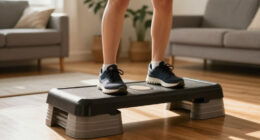
For the squat variation, place the heels on thin wedges or weight plates and lower with the feet roughly hip-width apart. Gabb advises keeping the chest forward, knees apart and weight through the heels, then driving back up to standing. She recommends learning the movement with body weight before adding a dumbbell or barbell. Her suggested starting point is three sets of eight to 10 repetitions with a barbell, or three sets of 10 to 12 with lighter dumbbells.
Strength Work for Running Demands
The advice gives runners a specific way to add lower-body strength work to their training, including muscles that may receive less attention than those used in familiar running sessions. Gabb says elevating the heels can make it easier for people with tight calves or ankles to reach a deeper squat while maintaining balance.
That potential training benefit should not be confused with a demonstrated injury-prevention effect. The source reports the coach’s rationale, but it does not cite a trial showing that raised squats reduce injuries or improve race times. For readers, the practical takeaway is to treat the movement as one possible part of a broader strength routine, not a guarantee against injury.
Products Worth Considering

Bowflex SelectTech 840 Adjustable Kettlebell

Therabody Theragun Mini 3rd Gen Massage Gun (Travel Essential, Black)

Garmin Venu® 3 Premium Fitness Smartwatch 45mm Black
As an affiliate, we earn on qualifying purchases.
How the Raised Squat Works
A heel-elevated squat modifies a standard squat by placing the heels on a small raised surface. According to Gabb, this can help people who struggle to keep their heels down, and may let them squat through more movement at the hips, knees and ankles. She says the exercise recruits several lower-body muscle groups.
The report recommends pairing the exercise with single-leg and standard deadlifts and calf raises a couple of times a week. It also advises against wearing running shoes for the squat, because their construction may tip the wearer forward. Gabb suggests flat-soled weightlifting shoes or bare feet to make it easier to judge how weight is distributed. Anyone using weights should first become familiar with the body-weight version and increase resistance gradually.
“When you run, your calves are one of the main muscle groups used through every phase of the running action.”
— Ania Gabb, running coach, speaking to Fit&Well
Limits of the Injury Claim
The article’s headline frames the exercise as a way to avoid injury and run stronger, but the material supplied does not show that raised squats prevent injury or improve running performance. Those outcomes remain unverified in this report. Gabb’s account of runners working their calves harder in carbon-plated shoes is also presented as her observation, not as a measured finding.
The source does not specify how much weight, how quickly to progress, or whether the exercise suits every runner. It also does not provide individualized guidance for people with pain, prior injuries or mobility limitations. Readers should stop if an exercise causes pain and seek advice from a qualified health or fitness professional when needed.
Applying the Advice Safely
Gabb’s guidance is to begin with body-weight repetitions, check the technique and add resistance only after becoming comfortable with the movement. She suggests incorporating the squats alongside deadlifts and calf raises a couple of times weekly, rather than treating them as a replacement for running-specific training.
The report does not announce a study or a formal program testing the recommendation. Whether heel-elevated squats reduce injury risk or improve running for a particular person will depend on factors the article does not assess, including training history, technique and existing symptoms.
Key Questions
What exercise does coach Ania Gabb recommend for runners?
Gabb recommends heel-elevated squats, performed with the heels on thin wedges or weight plates.
Does the report prove that the exercise prevents injuries?
No. It presents Gabb’s coaching recommendation and rationale, but does not cite evidence proving that raised squats prevent running injuries.
How should a beginner start?
The report advises trying the movement with body weight first to learn the technique before adding a dumbbell or barbell. Gabb also recommends starting with modest sets and repetitions.
Should runners wear running shoes for raised squats?
The report advises against running shoes for this exercise because their construction may tip the wearer forward. It suggests flat-soled weightlifting shoes or performing the movement barefoot, if comfortable and safe.
Source: fitandwell.com