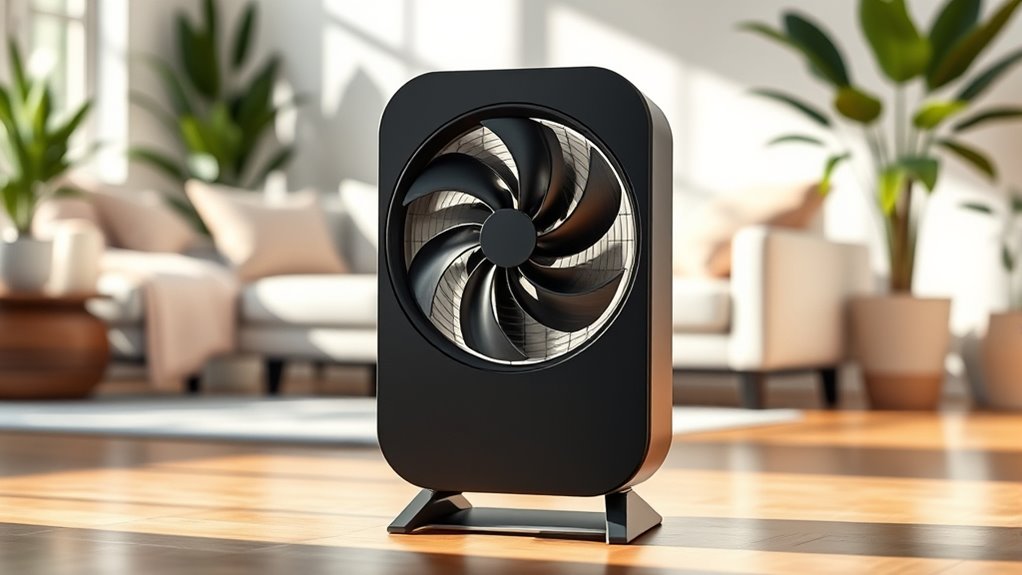

When searching for noisereducing air circulators, the key challenge is balancing quiet operation with effective airflow. The Vornado 660 stands out for its powerful yet quiet performance, making it ideal for larger rooms. For bedrooms or office spaces where silence is a priority, the Levoit Tower Fan offers a serene experience with its ultra-quiet operation. However, tradeoffs often include higher price tags or reduced airflow in some models. Continue reading to see how these options compare and which one fits your specific needs.

Get comfort and recovery gear delivered free with Prime
- Fast, free delivery on millions of items
- Prime Video, Amazon Music and more included
- Member-only deals all year
Complete the kit


Key Takeaways
- Most top-performing models combine multiple speed settings with noise reduction technology for versatile use.
- Fans with oscillation and adjustable angles tend to provide better coverage while maintaining quiet operation.
- Higher airflow capacity often correlates with increased noise, so balance your needs carefully.
- Smart features like Wi-Fi control add convenience but may introduce slight noise variations due to motors.
- Price often reflects build quality and noise reduction effectiveness; premium models generally perform better in quiet operation.


| noisereducing air circulator | Noise Level | Oscillation |
|---|---|---|
| Vornado 660 Large Whole Room A | — | — |
| Levoit Tower Fan for Bedroom | 28dB | — |
| DREO Fan for Bedroom | — | 90° horizontal, 105° vertical |
| DREO Smart Fan with RGB Light | — | 150° horizontal, 120° vertical |
| Dreo 12-Inch Quiet Table Fan w | 25dB | — |
| Fan for Bedroom | 25 dB | 90° vertical, 120° horizontal |
| DREO Oscillating Pedestal Fan | 20 dB | 120°+120° omni-directional |
More Details on Our Top Picks
Vornado 660 Large Whole Room Air Circulator Fan with 4 Speeds and 90-Degree Tilt
The Vornado 660 stands out for its effective Vortex technology, which circulates air evenly across large spaces, making it ideal for bedrooms, offices, and dorms. Compared to the DREO Table Fan, it offers more airflow capacity and better coverage in bigger rooms, though it lacks smart features and is bulkier. Its 4-speed settings allow tailored airflow, and the 90-degree tilt enhances directional control, while its quiet operation ensures it doesn’t disrupt sleep or work. The only tradeoff is its size and limited international compatibility. Overall, this fan is perfect for those prioritizing powerful, quiet, whole-room airflow without smart controls.
Pros:- Effective Vortex technology for consistent whole-room airflow
- Four adjustable speeds for customization
- 90-degree tilt for directional airflow
- Quiet operation suitable for bedrooms and offices
Cons:- Bulky size may not suit small spaces
- No smart home integration or remote control
Best for: Homeowners and office users needing reliable, quiet circulation for large spaces
Not ideal for: Small rooms or users seeking smart features and remote control
- Model:660
- Color:White
- Dimensions:13.5 in x 15 in x 11.75 in
- Speed Settings:4
- Tilt Adjustment:90 degrees
- Airflow Distance:up to 100 ft
- Voltage:U.S. standard
Our verdict“This is the best choice for those seeking powerful, quiet circulation in large rooms without smart features.”
Levoit Tower Fan for Bedroom, 28 ft/s Airflow, Quiet Operation
The Levoit Tower Fan excels in delivering quiet, customizable airflow with multiple modes, making it perfect for bedrooms and light sleepers who value a peaceful environment. Its 28dB noise level surpasses the Dreo Table Fan’s 25dB, but it offers more modes like Sleep and Auto, with remote control for ease of use. While it lacks detailed coverage specs and smart home compatibility, its slim tower design fits easily into tight spaces and provides consistent airflow. This model is better suited to those who want quiet operation and multiple modes over raw power or coverage. It’s a solid pick for bedroom comfort with minimal noise disturbance.
Pros:- Very quiet operation at 28dB, ideal for bedrooms
- Multiple modes and auto-adjust feature for personalized comfort
- Remote control and easy to clean design
- Slim tower fits in small spaces
Cons:- Limited info on maximum coverage area
- No smart home compatibility
Best for: People needing a quiet, feature-rich fan for bedrooms or offices
Not ideal for: Large, open spaces or users wanting high airflow capacity
- Airflow Speed:28 ft/s
- Noise Level:28dB
- Fan Modes:Normal, Turbo, Sleep, Auto
- Timer:12 hours
- Remote Control:Yes
- Adjustable Oscillation:Yes
- Auto Mode:Yes
Our verdict“This fan is perfect for those prioritizing quiet operation and versatile modes in bedroom settings.”
DREO Fan for Bedroom, Upgraded 2026 Model, 90ft Airflow, Quiet Oscillating Standing Fan with DC Motor, 8+ Speeds, 3 Modes, Adjustable Height, 8H Timer, 105° Vertical Pivot
The DREO 2026 model offers notably strong airflow, reaching up to 90 feet, making it ideal for large living rooms or open-plan spaces. Its 8+ speeds and 3 modes allow precise customization, and the quiet DC motor ensures minimal disturbance. Compared with the Dreo Table Fan, this model provides extensive coverage and adjustable oscillation, but it involves a more complex setup and higher power needs. Its height adjustment and detachable design make cleaning straightforward. This fan makes the most sense for users needing high-capacity circulation in sizable areas, accepting a slightly more involved operation. It’s a solid choice for those who prioritize power without sacrificing quietness.
Pros:- Powerful airflow up to 90 feet for large rooms
- Quiet operation with DC motor technology
- Multiple speeds and modes for tailored airflow
- Adjustable height and detachable parts for cleaning
Cons:- Features may be complex for casual users
- Requires an outlet and some setup effort
Best for: Users with large rooms needing powerful, quiet air circulation
Not ideal for: Small spaces or those seeking simple, plug-and-play fans
- Airflow Range:90 ft
- Airflow Capacity:1000 CFM
- Oscillation:90° horizontal, 105° vertical
- Height Adjustment:38-42 inches
- Speeds:8+
- Modes:3
- Timer:8 hours
Our verdict“This is ideal for large spaces where high airflow and quiet operation are priorities, accepting some complexity.”
DREO Smart Fan with RGB Light, Oscillating Pedestal Fan, 12 Speeds, 6 Modes, Wi-Fi/Voice/Alexa Compatible, 37-42 inches tall
The DREO Smart Fan excels in combining high airflow with smart features, making it ideal for tech-savvy users who want control via app, voice, or Alexa. Its 150° horizontal and 120° vertical oscillation, coupled with adjustable height, deliver wide coverage with quiet operation at just 20dB. The RGB lighting adds ambiance, and the 12 speeds plus 6 modes offer extensive customization. Unlike the simpler Levoit fan, this model’s smart controls and lighting elevate the user experience, but setup can be complex, and it comes at a higher price point. This pick is best for those who want both powerful air circulation and integrated smart features, especially in larger rooms or living areas.
Pros:- Powerful airflow suitable for large rooms
- Customizable RGB lighting for ambiance
- Smart controls via app, voice, or Alexa
- Quiet operation at 20dB
Cons:- Setup can be complex for some users
- Higher price compared to basic fans
Best for: Smart home enthusiasts seeking powerful airflow with customizable lighting
Not ideal for: Budget-conscious buyers or those preferring plug-and-play simplicity
- Airflow:1300 CFM
- Oscillation:150° horizontal, 120° vertical
- Height:37-42 inches
- Speeds:12
- Modes:6
- Lighting:RGB with 1500+ colors
- Control:Wi-Fi, Voice, Alexa, Remote
Our verdict“This fan is perfect for those wanting smart features combined with high airflow and ambiance control in larger spaces.”
Dreo 12-Inch Quiet Table Fan with 70ft Airflow, 3 Speeds, Adjustable Tilt, Desktop or Wall Mount, for Home and Office
The Dreo 12-Inch Table Fan offers a compact yet powerful airflow, reaching up to 70 feet, with a remarkably quiet operation at 25dB. Its small size and versatile mounting options—either on a desk or wall—make it ideal for personal spaces like offices, kitchens, or small bedrooms. Compared with the larger DREO standing fans, it provides less coverage but excels in portability and ease of setup. Its 3-speed settings and 120° tilt ensure adequate airflow for small to medium rooms. The tradeoff is its limited size and fewer speeds, which might not satisfy those needing intense or large-area circulation. It’s a good choice for users who want a quiet, space-efficient fan for personal use.
Pros:- Quiet operation at 25dB, suitable for work or sleep
- Reaches 70 feet airflow for its size
- Versatile mounting options including wall mount
- Easy to clean and move
Cons:- Limited to 3 speeds and smaller size
- Less suitable for large spaces or high-capacity needs
Best for: Individuals needing a quiet, portable fan for personal or small room use
Not ideal for: Large rooms or users requiring high airflow coverage
- Blade Diameter:7 inches
- Dimensions:10.8”D x 9.5”W x 11.8”H
- Noise Level:25dB
- Airflow Distance:70 ft
- Adjustable Tilt:120°
- Speeds:3
Our verdict“This fan is ideal for personal spaces where quiet operation and portability matter most, accepting limited coverage.”
Fan for Bedroom, Desk Fans, Air Circulator Fan with Remote, 90° Vertical + 120° Auto Oscillating, 100 Speeds, 10H Timer, 25dB Quiet, Rechargeable USB, for Home Office Travel (Black)
This compact fan excels at delivering powerful airflow in a noise-sensitive environment, thanks to its ultra-quiet 25 dB operation. Its 360° oscillation combined with adjustable speeds allows for versatile room coverage, making it stand out among smaller fans like the DREO 12-Inch Quiet Table Fan, which offers less coverage but is more stationary. The rechargeable 10,000mAh battery provides up to 18 hours of cordless use, ideal for travel or sleep, although this means it relies heavily on charging cycles. Compared to larger oscillating fans, it sacrifices some airflow capacity for portability and quiet operation. This pick makes the most sense for users seeking a quiet, mobile option that can adapt to different room sizes, especially in bedrooms or offices where noise matters.
Pros:- Extremely quiet at 25 dB, ideal for sleep or focus
- Long-lasting rechargeable battery for cordless convenience
- 360° oscillation ensures comprehensive coverage
- Multiple speeds and timer for customizable operation
Cons:- Limited airflow capacity compared to larger fans
- Battery life can vary with usage intensity
- Lacks detailed dimensions, making storage considerations harder
Best for: Individuals needing a portable, quiet fan for sleep or work in small or medium spaces
Not ideal for: Users requiring high airflow for large rooms or continuous, heavy-duty cooling
- Power Source:Rechargeable Battery, USB
- Battery Capacity:10,000mAh
- Max Speed:100 levels
- Noise Level:25 dB
- Timer:10 hours
- Oscillation:90° vertical, 120° horizontal
Our verdict“This fan is perfect for those prioritizing portability and quiet operation in small spaces.”
DREO Oscillating Pedestal Fan with Remote, 8 Speeds, 3 Modes, 120°+120° Omni-directional, 35-40″ Adjustable Height, 20 dB Quiet
The DREO pedestal fan provides broad and powerful airflow with 8 adjustable speeds and omni-directional oscillation, making it suitable for larger rooms like living areas or open offices. Its 20 dB noise level is impressively low for a fan of this size, surpassing models like the Levoit Tower Fan, which, while quieter, may not circulate air as widely. The adjustable height and remote control add to its convenience, though its plastic construction could impact long-term durability, especially in high-traffic households. While it’s less portable than a desk fan, this model’s extensive coverage makes it ideal for anyone needing quiet, wide-area cooling without disrupting the environment with noise.
Pros:- Powerful circulation with 8 speeds and 3 modes
- Extremely quiet at 20 dB, suitable for bedrooms and offices
- Omni-directional oscillation covers a wide area
- Adjustable height and remote control simplify operation
Cons:- Limited to indoor use; not designed for outdoor environments
- Plastic build may reduce durability over time
- Some users might find the noise level slightly higher than expected at maximum speeds
Best for: Homeowners or office users seeking a quiet, wide-area circulating fan for large rooms
Not ideal for: People with limited space or those preferring a portable, smaller fan for personal use
- Power Source:DC
- Room Type:Bedroom, Home Office, Living Room
- Number of Speeds:8
- Noise Level:20 dB
- Adjustable Height:Yes, 35-40 inches
- Oscillation:120°+120° omni-directional
Our verdict“This fan is well-suited for those needing quiet, extensive coverage in large indoor spaces.”

How We Picked
I evaluated these air circulators based on their noise levels, airflow performance, build quality, usability, and added features. Priority was given to models that balance quiet operation with effective airflow, especially in smaller or sensitive spaces. I also considered user feedback on durability and ease of use. The ranking reflects a combination of noise reduction capabilities, overall performance, and value for different types of buyers, from budget-conscious to premium seekers.Factors to Consider When Choosing Noisereducing Air Circulators
Choosing the right noisereducing air circulator involves more than just noise levels. It’s important to consider airflow capacity to ensure the fan cools or circulates effectively for your space. Noise reduction features vary widely, so look for models with specific sound-muffling technologies or multiple speed settings. Usability factors like remote control, oscillation, and adjustable height can enhance comfort. Additionally, consider the fan’s size and design to match your space, and weigh the tradeoffs between price and performance to find the best fit.Noise Levels and Sound Technology
Pay close attention to the decibel ratings and the sound-dampening technologies used in a fan. Some models advertise ‘quiet’ or ‘sleep’ modes that significantly reduce operational noise, ideal for bedrooms or workspaces. Remember, the quietest fans may have lower airflow capacity, so decide if minimal noise or maximum circulation is a priority for your environment. Features like insulated housings or brushless motors can contribute to quieter operation and longer lifespan.
Airflow Capacity and Coverage
Evaluate how much air the fan can move, typically measured in cubic feet per minute (CFM). Higher airflow is essential for larger rooms but often results in increased noise. For smaller spaces or personal use, lower CFM fans tend to be quieter and more energy-efficient. Consider adjustable oscillation and tilt features to optimize coverage without needing a higher airflow rating, which can help maintain a quieter experience.
Size, Design, and Space Compatibility
The size and shape of a fan matter greatly for placement. Compact fans are easier to fit on desks or shelves but might have limited airflow. Larger, pedestal-style fans often deliver more power but can be bulky and less discreet. Think about your available space and aesthetic preferences—some fans blend seamlessly into home decor, while others are more utilitarian. Balance size with performance needs for the best overall experience.
Features and Usability
Features such as remote controls, multiple speed settings, timers, and smart connectivity can enhance user comfort. However, more features often mean additional complexity and potential noise from motors or electronic components. Prioritize models with easy-to-use controls and reliable operation if you value simplicity. For tech-savvy users, Wi-Fi or voice control adds convenience but check for any noise tradeoffs in these functionalities.
Price and Value
While premium models tend to offer better noise reduction and build quality, they also come at a higher cost. Budget options might suffice for casual use but may lack advanced noise-muffling features. Consider how much you’re willing to invest based on your space and noise sensitivity. Sometimes, paying more results in a longer-lasting, quieter fan, but there are also excellent budget-friendly options that provide decent noise reduction and airflow.
Frequently Asked Questions
How quiet should a noisereducing air circulator be?
For a fan to be considered truly quiet, it should operate around 25-30 decibels, similar to a whisper or rustling leaves. Such models are suitable for bedrooms or workspaces where noise can disrupt sleep or concentration. Keep in mind that quieter fans may have lower airflow, so balance your expectations based on your room size and primary use. Many modern fans feature noise-reduction technology that allows for effective circulation without disturbing your environment.
Can I find a noisereducing fan that still moves a lot of air?
Yes, but there’s often a tradeoff involved. Fans with high airflow capacities, measured in CFM, tend to generate more noise, especially at higher speeds. The key is to look for models that incorporate noise-dampening features or multiple speed options, allowing you to run them at lower, quieter settings while still achieving adequate circulation. For larger spaces, consider oscillating fans with adjustable angles to maximize airflow without needing the highest noise levels.
Are smart fans actually quieter than traditional models?
Smart fans can be just as quiet as traditional models, especially if designed with noise reduction in mind. Many include features like variable speed settings and sleep modes that optimize quiet operation. However, some smart features, such as Wi-Fi modules or voice control, can add electronic noise or slight motor hums. Read product reviews carefully to verify noise levels at different settings, and choose models explicitly rated for quiet performance if noise is your primary concern.
Should I prioritize size or noise reduction in a fan?
It depends on your space and usage needs. Smaller fans are typically more discreet and portable but might have limited airflow and less advanced noise-dampening features. Larger fans usually provide better circulation with quieter operation due to more sophisticated motors and sound insulation, but they can be bulky. For bedrooms or quiet office environments, a larger, well-designed fan with noise reduction features often offers the best balance. Conversely, for personal or temporary use, a compact, quieter model might suffice.
How often should I clean my noisereducing fan to keep it quiet?
Regular maintenance is essential to keep a fan operating quietly. Dust buildup on blades and motors can cause imbalance and increase noise levels over time. Typically, cleaning once every few months is sufficient, especially if the fan is used frequently. Use a soft cloth to wipe blades and check for debris around the motor and vents. Well-maintained fans not only stay quieter but also last longer and operate more efficiently, maintaining their noise-reducing features.
Conclusion
If you prioritize overall quiet performance and versatile airflow, the Vornado 660 stands out as the best overall choice. For those on a budget who still want decent noise reduction, the Levoit Tower Fan offers excellent value. If premium features and smart connectivity are essential, the Dreo Smart Fan delivers high-tech convenience with quiet operation. Beginners or small-space users will appreciate the compact design of the Dreo 12-Inch Table Fan, while those needing powerful coverage should consider the DREO Oscillating Pedestal Fan. Your ideal pick depends on your space size, noise sensitivity, and feature preferences.