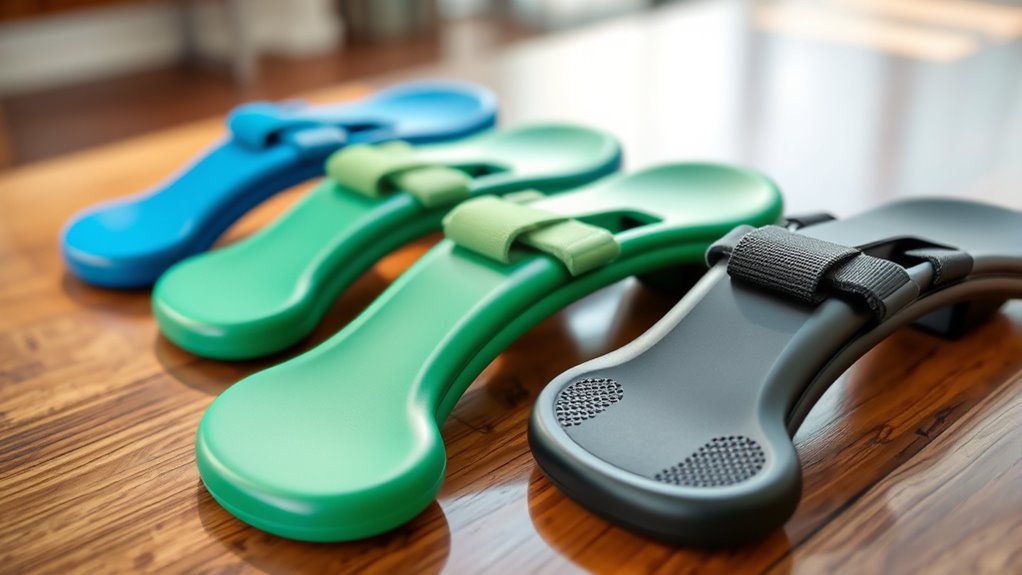
Ergonomic foot ankle stretchers come in three main forms — foot rockers, slant boards, and strap stretchers — and the right one depends on whether you’re targeting plantar fasciitis, tight calves, Achilles tendinitis, or general mobility. The PowerStep UltraFlexx Foot Rocker earns my best overall pick for its proven rocker geometry that supports both seated and standing stretches, while the StrongTek Adjustable Wooden Slant Board stands out if you want progressive incline angles for deeper calf work. For travelers or anyone on a budget, the COMNESS stretching strap offers a zero-footprint alternative. The core tradeoff in this category is stability versus portability: rigid rockers and boards deliver controlled, measurable stretches, while straps trade precision for packability. Keep reading for the full breakdown of all 14 options.

Get comfort and recovery gear delivered free with Prime
- Fast, free delivery on millions of items
- Prime Video, Amazon Music and more included
- Member-only deals all year
Complete the kit


Key Takeaways
- Rocker designs (PowerStep, Vive, Yes4All, ProStretch, Hausse) dominated for plantar fasciitis relief because their angled platform dorsiflexes the ankle at a controlled angle without requiring balance or strength.
- Adjustable slant boards like the StrongTek and TEMI were the only options that grow with your flexibility, making them better long-term investments than fixed-angle rockers for users recovering gradually.
- Strap-based stretchers (COMNESS and the Yoga Stretching Strap) were the only picks suitable for foot drop and post-surgery rehab where standing is not possible, but they require more technique to use safely.
- The ProStretch Double stands alone for bilateral stretching — ideal for runners who want to work both legs efficiently — but its single-unit sibling is more practical for most households.
- Wooden slant boards (TEMI, NORBASE, StrongTek) consistently offered higher weight capacity and stability than plastic rockers, at the cost of weight and storage space.




| ergonomic foot ankle stretcher | Material |
|---|---|
| PowerStep UltraFlexx Foot Rock | — |
| Vive Foot Rocker | Plastic with textured rubber base |
| TEMI Wooden Slant Board for Ca | Pressed wood |
| NexFit Foot and Calf Stretcher | High-durability plastic |
| Yes4All Foot Rocker | — |
| ProStretch Original Calf Stret | — |
| NORBASE Portable Wooden Slant | Wood |
| COMNESS Foot and Calf Stretche | Nylon laminate with six-loop rugged webbing |
| StrongTek Adjustable Wooden Sl | Lauan hardwood plywood |
| Foot and Calf Stretcher for Pl | Heavy-duty nylon |
| Calf and Foot Stretcher for Pl | — |
| ProStretch Original Double Cal | — |
| Vive Foot Rocker | Plastic |
| Hausse Foot Stretcher | — |
More Details on Our Top Picks
PowerStep UltraFlexx Foot Rocker – Foot and Calf Stretching Device
The UltraFlexx Foot Rocker stands out as the most complete stretching package in this roundup because it targets muscles, ligaments, and tendons together rather than just the calf. Its non-skid rocker bottom adds a level of stability that flat wedge designs like the TEMI slant board can’t match during dynamic rocking stretches, which matters if you’re working through shin splints or ankle strain recovery. Compared with the Vive Foot Rocker, the UltraFlexx puts more emphasis on deep, controlled stretching, though Vive counters with its center cutout for ankle strengthening. The main tradeoff is the recommendation to wear sturdy athletic shoes during use — barefoot users will get less grip and cushioning. The single-unit design also means one-size-fits-most rather than a true universal fit.
Pros:- Deep, effective stretch for plantar fasciitis, Achilles tendonitis, and shin splints
- Non-skid rocker bottom keeps the foot planted during dynamic stretches
- Builds flexibility and strength to help prevent repeat injuries
- Simple, drug-free pain relief that requires no assembly
Cons:- Recommended only with sturdy athletic shoes, limiting barefoot use
- Single-unit design may not fit very large or small feet
Best for: Runners and athletes recovering from plantar fasciitis, Achilles tendonitis, or shin splints who want a deep, full lower-leg stretch
Not ideal for: Barefoot stretchers or people with very small or very large feet, since the fixed design and shoe recommendation limit versatility
- Brand:PowerStep
- Model Number:7025-50UN
- Age Range:Adult
- Base:Non-skid rocker bottom
- Included Components:1 Foot Rocker
- Intended Use:Foot, calf, and lower leg stretching and strengthening
- Recommended Footwear:Sturdy athletic shoes
Our verdict“If you want one rocker that handles both stretching and strengthening for the entire lower leg, this is the pick; just plan to wear sneakers.”
Vive Foot Rocker – Calf Stretcher for Plantar Fasciitis and Achilles Tendinitis
What separates the Vive Foot Rocker from the PowerStep UltraFlexx is its center cutout, which supports dynamic ankle strengthening exercises — a genuine advantage if you’re rehabbing a wobbly ankle rather than just loosening a tight calf. The raised heel cup and textured anti-slip rubber base keep the foot locked in place, something the Yes4All rocker achieves only through its surface texture rather than a physical cradle. A 60-day guarantee also lowers the risk compared with options that offer no stated warranty. The honest tradeoff is build material: it’s all plastic, so it feels less substantial than wooden slant boards like the TEMI, and users over roughly 250 pounds may question its long-term sturdiness even though it flexes fine under normal stretching loads.
Pros:- Center cutout enables ankle strengthening exercises, not just passive stretching
- Raised heel cup and anti-slip rubber base hold the foot securely
- Ergonomic rocker design targets plantar fasciitis and Achilles tendonitis effectively
- 60-day guarantee reduces purchase risk
Cons:- All-plastic construction feels less durable than wooden alternatives
- Lightweight body can shift on slick flooring if not fully weighted
Best for: People in physical therapy or recovering from ankle strains who need strengthening exercises alongside stretching
Not ideal for: Heavier users or anyone wanting a premium-feeling build, since the all-plastic construction is the lightest-duty in this batch
- Brand:Vive
- Model Number:RHB2000
- Color:Gray
- Material:Plastic with textured rubber base
- Weight:0.62 kg
- Power Source:Manual
- Warranty:60-day guarantee
- Special Feature:Center cutout for ankle exercises
Our verdict“This makes the most sense for rehab-focused buyers who need strengthening capability, not just a deeper calf stretch.”
TEMI Wooden Slant Board for Calf Stretching and Squats
Unlike every rocker in this lineup, the TEMI slant board offers four fixed incline angles — 20°, 25°, 30°, and 40° — which lets you start gentle and progress as flexibility improves. That progression logic simply isn’t available on the Yes4All or PowerStep rockers, both of which lock you into a single stretch angle. The 500 lb weight capacity and solid pressed-wood build also make it far more robust than the plastic Vive rocker, and the built-in handle makes it easy to carry between rooms. The tradeoffs are real, though: it demands more floor space than a compact rocker, the adjustment mechanism isn’t clearly documented, and it’s less suited to targeted plantar fascia work since it stretches the whole calf chain.
Pros:- Four adjustable incline angles for progressive stretching
- 500 lb weight capacity exceeds any rocker in this roundup
- Non-slip surface on a sturdy pressed-wood base
- Built-in handle for easy portability
Cons:- Angle adjustment mechanism is not clearly documented
- Takes up more floor and storage space than compact rockers
Best for: Lifters and mobility trainers who want progressive incline control for squats, calf stretches, and balance work
Not ideal for: Apartment dwellers or travelers with limited storage space, since it’s bulkier than any rocker here
- Material:Pressed wood
- Weight:5 lbs
- Dimensions:11.8 x 15.7 x 1.2 inches
- Weight Capacity:500 lbs
- Adjustable Angles:20°, 25°, 30°, 40°
- Surface:Non-slip
- Handle:Built-in
Our verdict“Choose this over a rocker if progressive angles and heavy-duty capacity matter more than portability.”
NexFit Foot and Calf Stretcher with Stretching Guide
The NexFit stretcher earns its spot by being the most beginner-friendly option here, and the reason is simple: it ships with a stretching guide, so first-time users aren’t guessing about technique the way they would with the Yes4All or PowerStep rockers. Its slip-resistant rubber pads deliver stability comparable to the Vive’s rubber base, and the promise of fitting all foot sizes edges out the Yes4All, which caps out at 12.5 US. Compared with the UltraFlexx, NexFit skips the shoe requirement, making it more convenient for barefoot morning stretches — a common scenario for plantar fasciitis sufferers. The drawback is transparency: no listed dimensions or weight capacity, so heavier users are buying on faith rather than specs.
Pros:- Includes a stretching guide, removing guesswork for beginners
- Designed to fit all foot sizes
- Slip-resistant rubber pads keep the unit planted during use
- No athletic shoes required, unlike the PowerStep UltraFlexx
Cons:- Dimensions and weight capacity are not disclosed
- Plastic build is less robust than wooden slant boards
Best for: First-time buyers dealing with morning foot tightness who want guided instruction out of the box
Not ideal for: Heavier users or spec-driven shoppers who need confirmed weight capacity before buying
- Material:High-durability plastic
- Stability:Slip-resistant rubber pads
- Fit:Designed for all foot sizes
- Included:Stretching guide
- Intended Use:Foot, ankle, and calf stretching
- Footwear Requirement:None — barefoot-friendly
Our verdict“If you’re new to foot stretching and want instruction included, this is the easiest entry point in the roundup.”
Yes4All Foot Rocker – Calf Stretcher and Foot Massager for Plantar Fasciitis Relief
The Yes4All Foot Rocker carves out a distinct niche: it’s the most beginner- and senior-friendly rocker that works comfortably barefoot, thanks to a nonslip surface that doesn’t rely on shoe traction like the PowerStep UltraFlexx. Its 300 lb weight capacity sits above typical plastic rockers, and the curved ergonomic design doubles as a light foot massage surface — a small bonus the NexFit doesn’t offer. Compared with the Vive rocker, Yes4All skips the ankle-strengthening cutout but delivers a smoother, more comfortable stretch arc for straightforward plantar fasciitis relief. Two real limits: it caps at 12.5 US shoe size, excluding many men with larger feet, and the single fixed stretch angle can’t be dialed back for very tight calves the way the TEMI slant board’s 20° setting allows.
Pros:- Ergonomic curved design delivers a deep yet comfortable stretch
- Nonslip surface stays stable even barefoot
- 300 lb weight capacity and fits sizes up to 12.5 US
- Suitable for all ages and fitness levels, including seniors
Cons:- Does not accommodate shoe sizes above 12.5 US
- Single fixed stretch angle limits intensity control
Best for: Seniors and fitness beginners who stretch barefoot and want a gentle, comfortable rocker under 300 lbs
Not ideal for: Men with shoe sizes above 12.5 US or anyone needing adjustable intensity for very tight calves
- Weight Capacity:300 lbs
- Max Shoe Size:12.5 US
- Design:Ergonomic curved rocker with nonslip surface
- Intended Use:Calf, ankle, and foot stretching; plantar fasciitis relief
- Secondary Use:Foot massager surface
- Footwear Requirement:None — barefoot-friendly
Our verdict“This is the strongest barefoot-friendly rocker value for average-sized feet — just check your shoe size before ordering.”
ProStretch Original Calf Stretcher for Plantar Fasciitis & Tight Calves
The ProStretch Original stands out for its medical pedigree: it is APMA accepted and used in physical therapy clinics worldwide, which is a level of clinical validation none of the other rockers in this lineup can claim. Its rocker geometry locks the foot into a consistent stretching angle, so users get repeatable results without guessing at form — a real advantage over strap-based options like the COMNESS stretcher, where technique determines outcome. Compared with the Vive Foot Rocker, the ProStretch feels more purpose-built and less like a multipurpose gadget. The tradeoffs are real, though: the 250 lb weight limit and size 12 shoe cap exclude taller or heavier users, and it must be used with rubber-soled athletic shoes, so it is not a barefoot-on-the-couch solution.
Pros:- APMA accepted and trusted in physical therapy clinics worldwide
- Rocker design holds the foot in a consistent, effective stretching position
- Slip-resistant rubber pads keep it stable on hardwood and tile
- Effective across plantar fasciitis, Achilles tendonitis, and shin splints
Cons:- Weight limit of 250 lbs excludes larger users
- Only fits shoes up to adult size 12
- Requires rubber-soled athletic shoes — no barefoot use
Best for: Plantar fasciitis and Achilles tendonitis sufferers who want the same device physical therapists use and value predictable, repeatable stretching angles
Not ideal for: Users over 250 lbs or with feet larger than size 12, who will need a higher-capacity rocker or slant board
- Max Shoe Size:Adult up to size 12
- Weight Limit:250 lbs
- Slip Resistance:Rubber strips on bottom
- Certification:APMA Accepted
- Stretching Guide:Included via QR code
- Country of Origin:USA
Our verdict“The pick for buyers who prioritize clinical credibility and consistent stretching angles over capacity or versatility.”
NORBASE Portable Wooden Slant Board for Calf Stretching
Where foot rockers like the ProStretch Original lock you into one fixed angle, the NORBASE slant board gives you four distinct inclines (30° to 45°), letting you ramp intensity as flexibility improves. That progression matters for anyone rehabbing a stubborn calf or Achilles issue — starting at 30° and working toward 45° is a safer path than a single-angle device allows. Compared with the StrongTek board, NORBASE reaches steeper angles but gives up a position of adjustability in exchange. At just 4.5 lbs, it is also the easiest board here to shuttle between home, office, and gym. The compromise is durability: wood construction flexes and wears faster than metal or heavy plywood rivals, and the top angle still caps at 45° for users with severe mobility restrictions who need a gentler slope.
Pros:- Four incline angles (30°, 35°, 40°, 45°) for progressive intensity
- Lightweight 4.5 lb build travels easily to gym or office
- Doubles as a squat platform for strength work and Pilates
- Suitable for all ages and fitness levels
Cons:- Wood construction is less durable than metal or reinforced alternatives
- No incline options gentler than 30° or steeper than 45°
Best for: Runners and lifters who want to progressively deepen calf stretches and need a board light enough to take to the gym
Not ideal for: Users who need gentle inclines below 30°, such as early post-injury rehabilitation
- Brand:NORBASE
- Model Number:NB0822
- Weight:4.5 lbs
- Adjustable Positions:30°, 35°, 40°, 45°
- Material:Wood
- Included Components:Slant board
- Age Range:Adult
Our verdict“A smart choice for anyone who wants adjustable, progressive stretching rather than a fixed-angle rocker.”
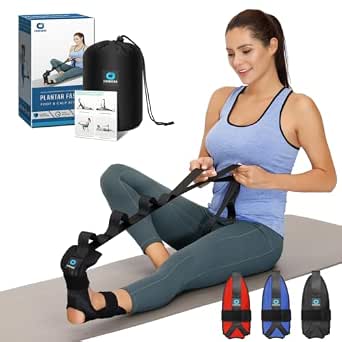
COMNESS Foot and Calf Stretcher – Stretching Strap for Plantar Fasciitis, Heel Spurs, Foot Drop, Achilles Tendonitis & Hamstring (Black)
The COMNESS strap takes a different approach than every rocker and board in this roundup: instead of leaning body weight into a device, you lie or sit and pull the stretch yourself through a six-loop webbing system. That makes it the only option here that covers the full posterior chain — plantar fascia, calf, hamstring, and quad — in one tool, something the ProStretch Original cannot touch. Its ergonomic cradle supports the arch comfortably, and the included pouch makes it genuinely travel-ready, unlike a wooden slant board. The flip side is that strap stretching is technique-dependent: results vary with form, and mastering the loops takes practice. It also offers none of the passive stability of a rigid rocker, so users with foot drop or severe weakness may struggle to hold positions without help.
Pros:- Stretches feet, calves, hamstrings, and quads with one tool
- Six-loop webbing offers multiple grip positions for varied intensity
- Ergonomic cradle supports the arch during stretches
- Packs into an included pouch for travel and gym bags
Cons:- Requires practice to master proper technique
- Strap-only design provides less support than rigid devices
Best for: Travelers and home exercisers who want one lightweight tool for feet, calves, hamstrings, and quads
Not ideal for: Users with significant weakness or foot drop who need the passive, rigid support of a rocker or board
- Brand:COMNESS
- Material:Nylon laminate with six-loop rugged webbing
- Color:Black
- Included:Instruction manual and carrying pouch
- Target Areas:Plantar fascia, arch, calf, hamstring, quadriceps
- Use Settings:Home, gym, office, travel
Our verdict“The most versatile and portable pick here, as long as you are willing to learn the technique.”
StrongTek Adjustable Wooden Slant Board with Side Handles
The StrongTek board earns its place with the gentlest entry angle in this batch: five positions starting at a mild 15°, versus the NORBASE’s steeper 30° floor. For anyone with tender Achilles tendons or early-stage plantar fasciitis, that low starting incline is the difference between a tolerable stretch and wincing through it. The anti-slip treads and side handles add confidence and portability that bare plywood competitors skip, and the lauan hardwood build feels sturdier underfoot than lighter boards. The tradeoff is at the top end — it maxes out around 35°, so flexible athletes will outgrow it faster than the NORBASE’s 45° range. The 16 × 12.5 inch platform is also on the compact side, which restricts squat stance work for bigger lifters.
Pros:- Five incline positions starting at a gentle 15°
- Anti-slip safety treads keep feet planted
- Side handles aid portability and positioning
- Solid lauan hardwood plywood construction
Cons:- Top incline caps near 35°, limiting progression for flexible users
- Compact platform restricts wide-stance exercises like deep squats
Best for: Beginners and early-stage rehab patients who need very gentle starting angles and stable footing
Not ideal for: Advanced athletes seeking steep inclines beyond 35° or a wide squat platform
- Material:Lauan hardwood plywood
- Incline Positions:5 levels: 15, 20, 25, 30, 35
- Dimensions:16 in deep × 12.5 in wide × 12 in high
- Surface:Anti-slip safety treads
- Handles:Integrated side handles
- Primary Use:Calf stretching, flexibility, and recovery
Our verdict“The safest starting point for sensitive feet and beginners, provided you don’t need steep angles later.”
Foot and Calf Stretcher for Plantar Fasciitis, Achilles Tendonitis, Heel Spurs, and Drop Foot – Yoga Stretching Strap for Leg, Thigh, and Hamstring (Black)
What separates this strap from the COMNESS is its hook-and-loop closure system, which lets users dial in exact tension and hold it without gripping — useful for anyone doing long, static holds for heel spurs or Achilles work. The multi-loop design also covers an unusually broad shoe size range, fitting women’s 5 to 13 and men’s 5 to 12, wider than the ProStretch Original’s size 12 ceiling. Like any strap, though, results demand consistent daily use, and the hook-and-loop fasteners can be genuinely awkward for users with limited hand strength or arthritis — a real drawback for the older buyers most likely to need it. Compared with rigid boards like the StrongTek, it trades passive stability for precision and portability, which will suit disciplined users far better than passive ones.
Pros:- Hook-and-loop fasteners allow precise, lockable tension control
- Fits a wide range of adult shoe sizes (women’s 5-13, men’s 5-12)
- Multi-loop design covers feet, calves, hamstrings, and quads
- Compact with included carrying pouch
Cons:- Results depend on consistent daily use
- Fasteners can be difficult for users with weak grip or limited hand mobility
Best for: Disciplined daily stretchers who want precise, adjustable tension for heel spurs and Achilles recovery
Not ideal for: Users with limited hand strength or arthritis who may struggle with the hook-and-loop fasteners
- Color:Black
- Material:Heavy-duty nylon
- Fits Women’s Shoe Sizes:5-13
- Fits Men’s Shoe Sizes:5-12
- Closure:Hook and loop fasteners
- Includes:Carrying pouch
- Target Conditions:Plantar fasciitis, heel spurs, Achilles tendonitis, drop foot
Our verdict“A precise, full-size-range strap for motivated users, provided their hands can manage the closures.”
Calf and Foot Stretcher for Plantar Fasciitis and Lower-Leg Stretching
Most foot rockers in this roundup cap out around 250 lb, and this model’s 300 lb stated capacity is what sets it apart from crowd favorites like the ProStretch Original, which is limited to 250 lb. The curved, angled rocker design targets calves, ankles, and feet in a single motion, which makes it a sensible pick for heavier users or anyone who found other rockers felt unstable under load. The nonslip surface keeps the foot planted during deep stretches, and shoe sizes up to US 12.5 give it slightly more headroom than the ProStretch’s size 12 limit. The tradeoff is transparency: no dimensions or material details are provided, so buyers can’t verify build quality before ordering, and the one-size design won’t suit every foot shape.
Pros:- 300 lb weight capacity exceeds most rocker-style stretchers in this category
- Nonslip surface keeps the foot secure during deep calf and ankle stretches
- Accommodates shoe sizes up to US 12.5
- Targets calves, ankles, and feet with one curved design
Cons:- No published dimensions or material details, making build quality hard to verify
- One-size design may not fit every user comfortably
Best for: Buyers over 250 lb who were excluded by the ProStretch’s weight limit and want a full-rocker stretch
Not ideal for: Shoppers who want documented dimensions and material specs before buying
- Weight capacity:Up to 300 lb
- Maximum shoe size:US 12.5
- Surface:Nonslip
- Design:Curved, angled foot rocker
- Target areas:Calves, ankles, feet
- Intended use:Flexibility and lower-leg mobility
Our verdict“A solid choice for heavier users who outgrew the 250 lb limits of mainstream rockers, provided they’re comfortable buying without detailed specs.”
ProStretch Original Double Calf Stretcher
The ProStretch Original carries the kind of credibility the other rockers here can’t claim: it’s used in physical therapy clinics worldwide and physician-trusted for plantar fasciitis, Achilles tendonitis, and shin splints. Its dual-foot design lets you stretch both legs at once, something the single-foot Vive Foot Rocker and the Hausse can’t do, which matters if you’re doing bilateral rehab or short on time. The slip-resistant rubber pads and included stretching guide via QR code round out a genuinely professional package. The limitations are real, though: a 250 lb weight limit trails the 300 lb capacity of the Calf and Foot Stretcher above, shoes stop at size 12, and you must wear rubber-soled athletic shoes during every session.
Pros:- Physician-trusted and used in physical therapy clinics worldwide
- Dual design stretches one or both feet simultaneously
- Slip-resistant rubber pads keep it stable on any floor surface
- Includes a stretching guide accessible via QR code
Cons:- 250 lb weight limit is lower than competing rockers
- Requires wearing rubber-soled athletic shoes during use
- Limited to adult shoe sizes up to 12
Best for: Rehab patients and runners who want the device physical therapists actually use and want to stretch both legs simultaneously
Not ideal for: Buyers over 250 lb or with feet larger than size 12, plus anyone who wants to stretch barefoot
- Fits shoe size:Adult up to size 12
- Weight limit:250 lbs
- Design:Dual foot rocker
- Grip:Slip-resistant rubber pads
- Includes:Stretching guide via QR code
- Made in:USA
- Conditions targeted:Plantar fasciitis, Achilles tendonitis, shin splints, tight calves
Our verdict“If you want the rocker your physical therapist would recognize and value bilateral stretching, this is the one to buy — as long as you’re under the weight and size limits.”
Vive Foot Rocker – Calf Stretcher for Achilles Tendinitis, Plantar Fasciitis Pain Relief
What separates the Vive from every other rocker in this lineup is its center cutout, which supports dynamic ankle strengthening exercises rather than just passive stretching — a genuine advantage for anyone rebuilding strength after an injury. Compared with the ProStretch Original, the Vive adds a raised heel cup and textured anti-slip rubber base that cradle the foot more securely, and its 60-day guarantee removes most of the purchase risk. The compromises are worth weighing: the plastic construction feels less substantial than the ProStretch’s clinic-grade build, and the small sizing means larger feet may overflow the platform, unlike the roomier Calf and Foot Stretcher reviewed above.
Pros:- Center cutout enables ankle strengthening exercises, not just static stretching
- Raised heel cup and non-slip rubber base keep the foot locked in place
- Effective for plantar fasciitis, Achilles tendonitis, and arch pain
- Backed by a 60-day guarantee
Cons:- Plastic construction may feel less durable than clinic-grade alternatives
- Small sizing may not accommodate larger feet
Best for: People in active ankle rehab who need strengthening work alongside stretching, plus first-timers who want guarantee-backed purchase
Not ideal for: Buyers with large feet or those who want a heavy-duty, clinic-grade build
- Brand:Vive
- Color:Gray
- Material:Plastic
- Size:Small
- Base:Textured anti-slip rubber
- Special feature:Center cutout for ankle strengthening
- Guarantee:60-day
- Conditions targeted:Plantar fasciitis, Achilles tendonitis, arch pain, tight calves
Our verdict“The smart pick for rehab-focused buyers who want strengthening capability and a guarantee, though big-footed users should size up to a larger rocker.”
Hausse Foot Stretcher – Calf Stretcher for Plantar Fasciitis, Non-Slip Foot Rocker (Blue)
At 15.2 ounces and roughly 10 inches long, the Hausse is the travel-friendly option of this batch — light enough to stash in a gym bag or desk drawer, which is something the clinic-bound ProStretch Original and the larger Calf and Foot Stretcher can’t match. Its ergonomic design emphasizes maximum foot extension and ankle straightening, and the adjustable fit works for most men’s and women’s shoe sizes. It’s a reasonable choice for office workers or frequent travelers dealing with plantar fasciitis flare-ups away from home. Be realistic about the tradeoffs: the lightweight build that makes it portable also makes it less rock-solid under aggressive stretching, and very large or very small feet may not sit comfortably on the platform.
Pros:- Featherweight 15.2 oz build is the most portable in this batch
- Adjustable design fits most men’s and women’s foot sizes
- Non-slip surface keeps stretching safe on hard floors
- Works for rehabilitation as well as everyday pain relief
Cons:- Very large or very small feet may not fit comfortably
- Lightweight construction feels less stable than clinic-grade rockers like the ProStretch
Best for: Office workers, travelers, and gym-goers who want a stretcher they can carry between locations
Not ideal for: Buyers who want a heavy, stationary rocker for aggressive daily stretching at home
- Brand:Hausse
- Model number:10
- Color:Blue
- Item weight:15.2 ounces
- Dimensions:10.3 x 4.5 x 4 inches
- Target use:Ankle
- Specific uses:Rehabilitation, pain relief, plantar fasciitis, Achilles tendonitis
- Special features:Lightweight, non-slip, portable
Our verdict“If your stretching happens in multiple locations throughout the week, this is the carry-anywhere option — just don’t expect tank-like stability.”

How We Picked
I evaluated each stretcher against four criteria that directly affect outcomes: stretch angle and adjustability (does it deliver a meaningful dorsiflexion range, and can it adapt as flexibility improves?), stability and build (weight capacity, non-slip base, whether it wobbles under load), ergonomic shaping (contoured foot plates, heel cradles, and handles that reduce strain on hands and the standing leg), and versatility (whether it covers calf, hamstring, and plantar stretch positions or serves a single narrow purpose). Portability and storage also factored in, since many buyers use these at an office desk or while traveling.
The ranking order reflects a simple logic: products that combine adjustability with stable, repeatable stretching placed highest, fixed-angle but well-engineered rockers filled the mid-tier, and single-purpose or technique-dependent options rounded out the list. Where two products looked similar on paper — as with the Vive and Hausse rockers — I differentiated them on plate contouring, base grip, and whether the design suits beginners or already-flexible users.
Factors to Consider When Choosing Ergonomic Foot Ankle Stretchers
Choosing between foot rockers, slant boards, and strap stretchers is the single biggest decision in this category, and many buyers pick the wrong format for their condition. These are the factors that actually change your results.Rocker vs. Slant Board vs. Strap: Match the Format to Your Condition
The most common mistake I see is buying a slant board when a rocker is needed, or vice versa. Rockers hold your foot at a fixed dorsiflexion angle with a heel cradle, which makes them ideal for plantar fasciitis and Achilles issues where you want a passive, repeatable stretch with no balancing. Slant boards put your whole body weight into the stretch, making them better for tight calves and improved squat depth, but they demand balance and healthy ankles. Straps are the only format for foot drop, post-operative rehab, or anyone who cannot stand safely. If your physical therapist specified a stretch type, that dictates your format before anything else.
Adjustability Determines Longevity
A fixed 30-degree rocker feels challenging for a beginner and trivially easy after three months of daily stretching — that’s wasted money. Adjustable incline boards let you start at a gentle angle and progress as flexibility improves, which is why models like the StrongTek earn their premium. If you choose a fixed-angle rocker, accept that it serves a window of your recovery rather than the full journey. Runners and athletes should treat adjustability as non-negotiable, since their flexibility needs change across training cycles. Casual users stretching for morning stiffness can safely skip it.
Base Stability and Weight Capacity
Every stretcher in this category fails the same way: a slick floor plus a shallow base equals a slipped stretch and possibly a fall. Look for rubberized treads on the underside, a wide footprint, and a stated weight capacity comfortably above your body weight — especially if you’ll load the device with your full weight on one leg. Wooden slant boards generally outperform molded plastic rockers here, both in load rating and in resisting flex under heavy users. Heel cradles and raised lips matter too, since they stop your foot sliding forward mid-stretch when you lean into it.
Portability and Storage Reality Check
A slant board that lives in a closet gets used once a week; one that sits by the couch gets used daily. Before buying, picture where the stretcher will actually live and measure that space — folding wooden boards and flat straps solve this, while fixed rockers occupy permanent floor or shelf space. Frequent travelers should lean toward strap stretchers or compact rockers like the NORBASE, accepting a less controlled stretch in exchange for consistency on the road. The best stretcher for your recovery is the one you’ll actually use every day, and friction of access quietly kills stretching routines more than any design flaw.
Bilateral Use and Multi-User Households
If two people in your home will share the stretcher, or you want to stretch both calves in one session, double-unit designs like the ProStretch Double save real time and keep both legs balanced. The tradeoff is floor space and a higher commitment than most beginners need. Adjustable boards also handle shared use well, since each person can reset the angle. Single rockers are perfectly adequate for solo users — don’t pay for bilateral capability you won’t use.
When to Pay More (and When Not To)
Premium pricing in this category buys adjustability, hardwood construction, and better grip engineering — worth it if you’re a serious athlete or expect years of daily use. For a first-time buyer treating mild plantar fasciitis, a well-designed molded rocker delivers nearly identical results at a fraction of the cost. Where I would not economize: weight capacity and base traction, because those relate directly to safety. Accessories like included stretching guides, resistance bands, or massage texture are nice-to-haves that shouldn’t drive your decision, though they can tip a tie between two similar models.
Frequently Asked Questions
Is a foot rocker or a slant board better for plantar fasciitis?
For plantar fasciitis specifically, a foot rocker is usually the better choice because it cradles the heel and holds the ankle in dorsiflexion, stretching the fascia and calf simultaneously without requiring you to balance or load the inflamed tissue fully. Slant boards place your entire body weight on the stretch, which can aggravate an acute flare even though it builds calf length over time. Many people with plantar fasciitis start with a rocker during the painful phase and add a slant board later for maintenance. If mornings are your worst symptom, a rocker beside the bed lets you stretch before your first steps — a habit clinicians frequently recommend.
How steep should the stretch angle be for a beginner?
Beginners should start in the 15 to 20 degree range and hold each stretch for 30 seconds rather than pushing for a deep angle immediately. Going steeper too early strains the Achilles tendon instead of lengthening the calf, and that setback can sideline your routine for weeks. This is the strongest argument for adjustable slant boards: you can begin shallow and increase the incline every few weeks as your range improves. Fixed-angle rockers around 30 degrees are better suited to people who already have decent flexibility or who will use them seated. Progress should come from longer holds and greater frequency first, angle second.
Can a stretching strap replace a rocker or slant board?
A strap can match the stretch quality of a rocker for seated users, and it’s the only real option for foot drop, post-surgery recovery, or anyone whose balance makes standing stretches unsafe. The catch is technique: without a fixed platform, the angle depends entirely on how you position your leg and pull the strap, so results vary session to session. Straps also reach places rockers can’t, including hamstrings and hip mobility work, which makes them more versatile overall. If you’re disciplined and mobile, a strap is a legitimate primary tool; if you want a repeatable, no-thought stretch, a rocker or board wins.
How often should I use an ankle stretcher to see results?
Most people notice meaningful calf and plantar flexibility changes within two to four weeks of stretching two to three times daily, with holds of 30 seconds per position. Consistency matters far more than intensity — three gentle daily sessions beat one aggressive session that leaves you sore. Post-workout and first thing in the morning are the highest-value windows, since tissue is warm or, in the morning, at its most shortened. If pain increases after a week of consistent use, the issue is usually angle or duration, not the device itself, and backing off intensity resolves it.
Are wooden slant boards worth the extra weight and cost over plastic rockers?
Wood earns its premium in three situations: you weigh over about 220 pounds and want a platform that won’t flex, you want adjustable angles for long-term progression, or multiple people will share the device. Plastic molded rockers are genuinely sufficient for lighter users treating plantar fasciitis, and they’re easier to move between rooms. Where wood falls short is portability and storage — even folding boards are bulkier than a rocker you can slide under a couch. Match the material to your weight, goals, and available floor space rather than assuming pricier means better for everyone.
Conclusion
For most buyers, the PowerStep UltraFlexx Foot Rocker is the best overall choice — it balances proven rocker geometry, stable construction, and broad suitability for plantar fasciitis and calf work. If value is your priority, the Yes4All Foot Rocker delivers the core benefits of the category without the premium, and the COMNESS strap undercuts everything for budget-limited or traveling users. The StrongTek Adjustable Wooden Slant Board is the premium pick, thanks to adjustable inclines that grow with your flexibility and a hardwood build built to last years. Beginners with acute plantar fasciitis pain should start with the gentle, forgiving Vive Foot Rocker, while the ProStretch Double serves runners who want efficient bilateral stretching, and the strap-based options remain the right call for foot drop, post-surgery rehab, or seated-only routines. Whichever format you choose, daily consistency will do more for your ankles than any single design feature — pick the one you’ll actually use every day.