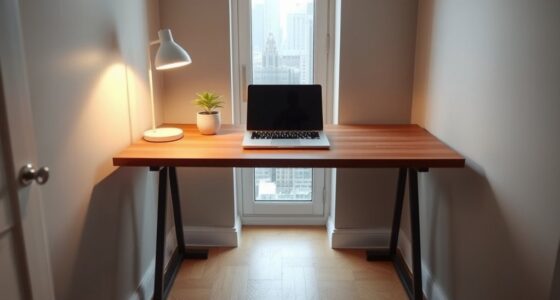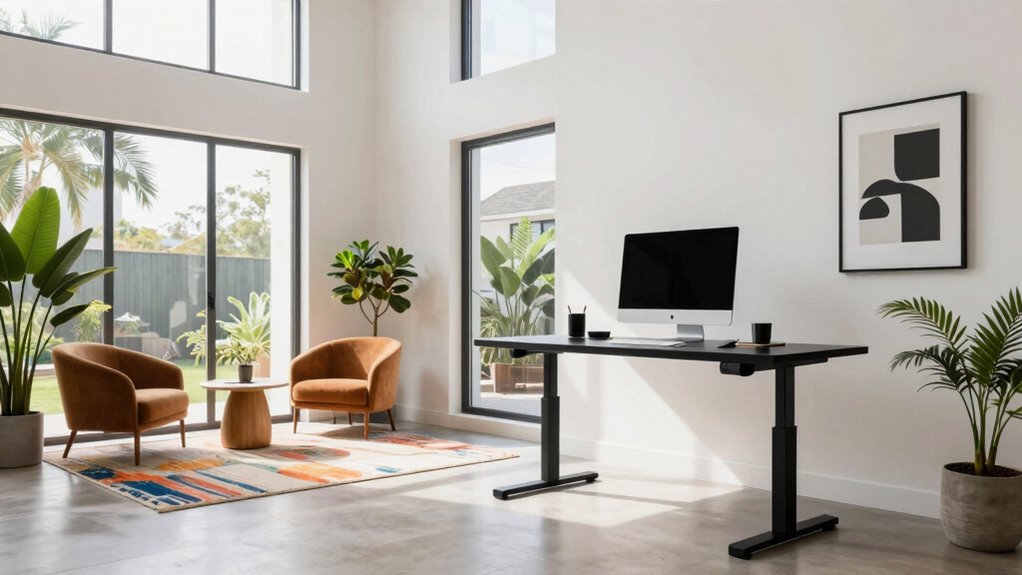
To maximize your standing desk in an open floor plan, position it near natural light sources to boost mood and reduce eye strain, but avoid glare on screens. Place it where sound is minimized with sound-absorbing panels or rugs, creating a quieter zone for focus. Make certain the setup supports ergonomic principles, with monitors at eye level and organized cables. Want to discover more ways to optimize your workspace? Keep exploring for clever layout ideas and tips.

Get comfort and recovery gear delivered free with Prime
- Fast, free delivery on millions of items
- Prime Video, Amazon Music and more included
- Member-only deals all year
Key Takeaways
- Position the standing desk near natural light sources to enhance visibility and reduce glare for a comfortable working experience.
- Place the desk within designated zones to separate work, meetings, and relaxation areas in the open floor plan.
- Ensure the desk is adjustable for easy transition between sitting and standing, promoting flexibility throughout the day.
- Use sound-absorbing panels or rugs around the desk to minimize noise and improve acoustic comfort.
- Organize cables and accessories neatly to maintain an open, clutter-free workspace that supports efficient movement.
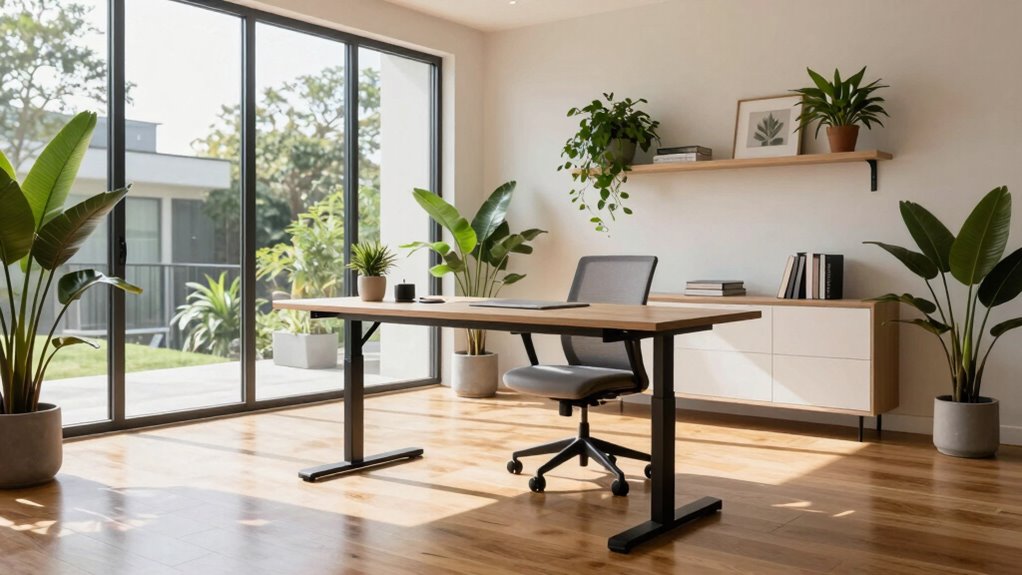
An open floor plan home office offers a seamless, flexible workspace that promotes productivity and creativity. With fewer walls and boundaries, you have the freedom to customize your environment, but that also means paying extra attention to how your space supports your comfort and focus. Your standing desk, a crucial piece of your setup, needs to be positioned thoughtfully to maximize its benefits. The right placement can reduce strain, improve posture, and foster better work habits, making your entire day more efficient.
Start by considering your natural light sources. Position your standing desk where you can take advantage of daylight without glare on your screen. This not only reduces eye strain but also keeps you alert and energized. Next, think about the flow of your workspace. You want your desk to be accessible without disrupting the overall openness of the room. Placing it near an acoustic solution like sound-absorbing panels or rugs can help dampen noise and create a quieter environment, especially if your home office is shared or noisy. This improves concentration and minimizes distractions, letting you stay focused on your tasks. Incorporating ergonomic principles into your setup can further enhance your comfort and productivity.
Position your desk near natural light and acoustic solutions to enhance focus and comfort in your open home office.
In terms of ergonomic accessories, your desk’s position matters just as much as the accessories you use. A well-placed monitor at eye level, an adjustable keyboard tray, or a supportive footrest can make a significant difference in your comfort. When your desk is correctly aligned, these accessories work more effectively, reducing the risk of repetitive strain injuries and fatigue. Remember, the goal is to keep your body in a natural, relaxed posture, so don’t hesitate to experiment with desk height and keyboard placement until it feels right. Additionally, paying attention to workspace organization can help you maintain a clutter-free environment that supports efficiency and focus. Proper lighting control can also help reduce eye strain and improve visual comfort, especially during long work sessions.
A smart placement also involves cable management. Keep cords organized and out of your way to prevent clutter and potential tripping hazards. This not only maintains the open aesthetic but also keeps your workspace streamlined and efficient. Consider mounting your monitors or using wireless accessories to reduce clutter further. Your overall setup should encourage movement and flexibility, making it easy to switch between sitting and standing positions throughout your workday. Additionally, being mindful of digital content and research trends can help you adapt your workspace to evolving needs and technologies.
Moreover, understanding the importance of financial independence, as seen in the career transitions of individuals like Kate from “Breaking Amish,” can motivate you to invest in ergonomic and organizational tools that enhance your work environment and overall well-being. Finally, think about creating zones within your open floor plan. Designate specific areas for focused work, meetings, or relaxation, and position your standing desk accordingly. This helps you leverage the open layout’s benefits without sacrificing comfort or productivity. By thoughtfully arranging your workspace with ergonomic accessories and acoustic solutions, you’ll transform your open floor plan into a smarter, more comfortable home office that adapts to your needs.
adjustable standing desk for open floor plan
As an affiliate, we earn on qualifying purchases.
As an affiliate, we earn on qualifying purchases.
Frequently Asked Questions
How Do I Minimize Noise Distractions in Open Floor Plan Home Offices?
To minimize noise distractions in your open floor plan home office, use soundproofing techniques like sealing gaps around doors and windows. Installing acoustic panels on walls can absorb sound and reduce echo, making your workspace quieter. Keep your desk away from noisy areas and consider using a white noise machine to mask background sounds. These strategies help create a more focused environment, boosting productivity and comfort for your workday.
What Are the Best Privacy Solutions for Open Floor Plan Workspaces?
Think of your workspace as a castle—privacy screens are your sturdy walls, and soundproof panels are your moat, keeping distractions at bay. You can strategically position privacy screens to create personal zones without blocking light or flow. Add soundproof panels on walls or ceilings to absorb noise, ensuring your castle remains a peaceful sanctuary. This smart setup helps you focus and work efficiently in your open plan environment.
How Can I Optimize Lighting in a Shared Open Office Area?
To optimize lighting in a shared open office, maximize natural light by positioning desks near windows, using sheer curtains to reduce glare. Incorporate task lighting at each workstation to make certain of focused illumination without disturbing others. Adjust overhead lights to create a balanced ambiance, reducing shadows and eye strain. By combining natural light with targeted task lighting, you create a comfortable, productive environment that adapts to different tasks and times of day.
What Are Space-Saving Furniture Ideas for Open Floor Plans?
Imagine you’re in a bustling speakeasy—space is tight but stylish. To save space, opt for modular storage that adapts to your needs and multifunctional furniture that serves dual purposes, like a sofa bed or fold-away desk. These pieces maximize your open floor plan, keeping the room uncluttered and versatile. You’ll stay productive and relaxed, making the most of your space without sacrificing style or function.
How Do I Create Designated Zones Within an Open Floor Plan?
You create designated zones by using dividing partitions to separate different areas visually and functionally. Add zone rugs to define each space further, making your workspace feel intentional and organized. Position your standing desk near the dividing partitions and zone rugs to establish a clear boundary between work and relaxation zones. This setup enhances focus and comfort while maintaining the open feel of your floor plan.
As an affiliate, we earn on qualifying purchases.
Conclusion
By optimizing your standing desk’s position in your open floor plan home office, you create a more productive and comfortable workspace. Imagine reducing neck strain by 30% simply by adjusting your desk height—it’s like gaining an extra hour of focus each day. When your setup is smarter, your day flows smoother, and your work feels less like a chore. Make small changes today, and watch your efficiency and comfort soar tomorrow.
sound-absorbing panels for home office
As an affiliate, we earn on qualifying purchases.
As an affiliate, we earn on qualifying purchases.
cable management organizer for desk
As an affiliate, we earn on qualifying purchases.
As an affiliate, we earn on qualifying purchases.
Halloween Picks
halloween
As an affiliate, we earn on qualifying purchases.