Choosing between a mechanical and an ergonomic keyboard depends on what you prioritize. If you want quick, responsive gaming performance, a mechanical keyboard with tactile switches is ideal. However, if long typing sessions cause discomfort, an ergonomic model with a split or curved design can help reduce strain and prevent injury. Understanding these differences can help you find the best fit for your needs—keep going to discover more about what suits you best.
Key Takeaways
- Mechanical keyboards offer quick, tactile feedback ideal for gaming, while ergonomic models prioritize comfort for long typing sessions.
- The choice depends on whether you need fast response times or reduced strain during extended use.
- Hybrid keyboards combine features but tend to be more expensive; selecting depends on personal priorities.
- Mechanical switches enhance control and durability, whereas ergonomic designs promote natural hand posture and reduce fatigue.
- Ultimately, matching the keyboard type to your specific tasks and comfort needs makes a significant difference.

When choosing a keyboard, understanding the differences between mechanical and ergonomic models is essential for finding the best fit for your needs. If you’re serious about gaming performance, a mechanical keyboard often offers the edge you need. Mechanical switches tend to be more responsive and durable, providing quicker feedback that can improve your reaction times during intense gameplay. The tactile feel of mechanical keys helps you know exactly when a key has registered, reducing accidental presses and boosting your overall gaming accuracy. This responsiveness can make a noticeable difference in fast-paced games where every millisecond counts.
Mechanical keyboards offer rapid, responsive feedback that enhances gaming accuracy and reaction times.
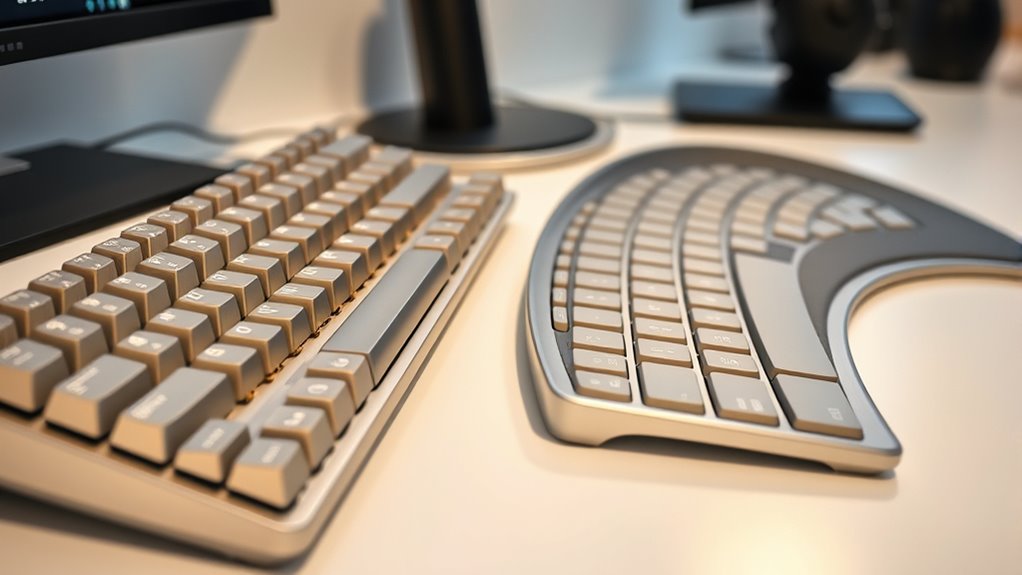
On the other hand, if your primary concern is typing accuracy and comfort during long sessions, ergonomic models might serve you better. Ergonomic keyboards are designed with your natural hand and wrist posture in mind, reducing strain and fatigue over extended periods. They often feature split layouts, curved designs, or tenting options that promote a more natural hand position. While they may not deliver the same rapid response as mechanical keyboards, they help you maintain focus and precision during prolonged typing tasks. You might find that ergonomic models improve your overall typing accuracy because you’re less distracted by discomfort or fatigue. Additionally, growth mindset can encourage you to explore different keyboard options to optimize your comfort and performance.
The choice between the two also depends on your usage habits. For gaming, mechanical keyboards are generally favored because they provide a more tactile and reliable keypress, which translates into better control and faster input. Mechanical switches come in various types—linear, tactile, and clicky—allowing you to tailor your experience to your preferences and gaming style. Conversely, if you spend hours typing reports, emails, or coding, ergonomic keyboards can help you sustain accuracy and comfort, reducing the risk of repetitive strain injuries.
It’s worth noting that some keyboards blend these features, offering mechanical switches within ergonomic designs. These hybrid models aim to provide the best of both worlds—responsive gaming performance and comfortable, accurate typing. However, they tend to come at a higher price point. Ultimately, your decision should revolve around what matters most to you: if quick, precise responses in gaming are your priority, a mechanical keyboard is likely your best choice. If long-term comfort and reducing strain take precedence, then an ergonomic model could serve your needs better. Remember, your keyboard is a tool meant to enhance your experience, so choose one that aligns with how you use your device daily.

Lumbar Support Pillow for Office Chair, Office Home Essentials,Gifts for Mom,Dad, Back Support Pillow for Car, Chair Cushions,Back Pain Relief Improve Posture,Mesh Cover Double Adjustable Straps
For convenience and durability, we upgraded and lengthened the straps to fit more chairs instead of adding extra...
As an affiliate, we earn on qualifying purchases.
Frequently Asked Questions
Can Ergonomic Keyboards Improve Long-Term Wrist Health?
Yes, ergonomic keyboards can improve your long-term wrist health. They promote better wrist mobility and reduce strain, making typing more comfortable. By aligning your hands and wrists naturally, these keyboards help prevent repetitive strain injuries and discomfort over time. If you spend hours typing daily, investing in an ergonomic keyboard supports better wrist health, enhances typing comfort, and encourages proper posture, ultimately protecting your wrists for years to come.
Are Mechanical Keyboards Quieter Than Ergonomic Models?
Think of your keyboard as a musical instrument—some produce a gentle hum, others a louder ring. Mechanical keyboards often have a switch noise that’s more pronounced, making their typing sound louder than ergonomic models. If quietness is your priority, ergonomic keyboards tend to be quieter, with softer keystrokes. So, yes, mechanical keyboards typically aren’t as quiet as ergonomic ones, especially during rapid typing sessions.
Do Ergonomic Keyboards Require Special Desk Setups?
Yes, ergonomic keyboards often require a special desk setup. You’ll want to adjust your desk height to make certain your wrists stay straight and comfortable. Additionally, most ergonomic models allow you to modify the keyboard tilt, which helps reduce strain on your wrists and shoulders. Setting up your workspace properly helps you maximize comfort and prevent long-term injuries, making ergonomic keyboards a smart investment for a tailored, supportive environment.
How Do Cost Differences Impact Long-Term Value?
Think of it like bargaining in a medieval market—you get what you pay for. The price comparison shows ergonomic keyboards tend to be pricier upfront, but their durability considerations often mean they last longer, offering better long-term value. Though a mechanical keyboard might cost less initially, investing in an ergonomic one can reduce strain and health risks, ultimately saving you money and discomfort over time.
Are There Hybrid Keyboards Combining Mechanical and Ergonomic Features?
Yes, hybrid keyboards with mechanical and ergonomic features do exist. They often feature hybrid designs that combine the tactile feedback of mechanical switches with ergonomic layouts to reduce strain. Many models also offer customizable switches, allowing you to tailor the typing experience to your preferences. These hybrid options provide a versatile solution, enabling you to enjoy the benefits of both mechanical and ergonomic keyboards in a single device.

Samsonite Lumbar Support Pillow for Office Chair, Lower Back Support for Car, Back Pillow Desk Chair Cushion with Memory Foam, Improved Posture Backrest
𝗔𝗹𝗹 𝗗𝗮𝘆 𝗖𝗼𝗺𝗳𝗼𝗿𝘁 - High-grade memory foam contours to your spine, delivering lumbar support for office chair users...
As an affiliate, we earn on qualifying purchases.
Conclusion
Ultimately, choosing between mechanical and ergonomic keyboards is like picking your sword in a duel — it depends on your fight. If you want precision and satisfying feedback, a mechanical might be your Excalibur. If comfort and long-term health matter most, an ergonomic is your shield. Remember, your keyboard choice shapes your daily battle with fatigue and strain. So, weigh your needs, and choose wisely — your hands will thank you for it.

LOXP Adjustable Laptop Stand for Desk, Portable Airflow Laptop Riser Holder
Adjustable & Ergonomic Design: This laptop stand can be adjusted to a comfortable height and angle according to...
As an affiliate, we earn on qualifying purchases.

Gogoonike Laptop Stand for Desk, Adjustable Laptop Riser Holder
【Adjustable & Ergonomic】:This laptop stand can be adjusted to a comfortable height and angle according to your actual...
As an affiliate, we earn on qualifying purchases.