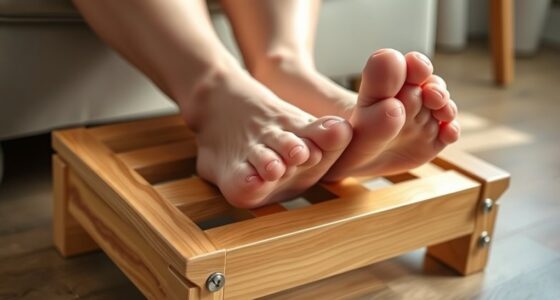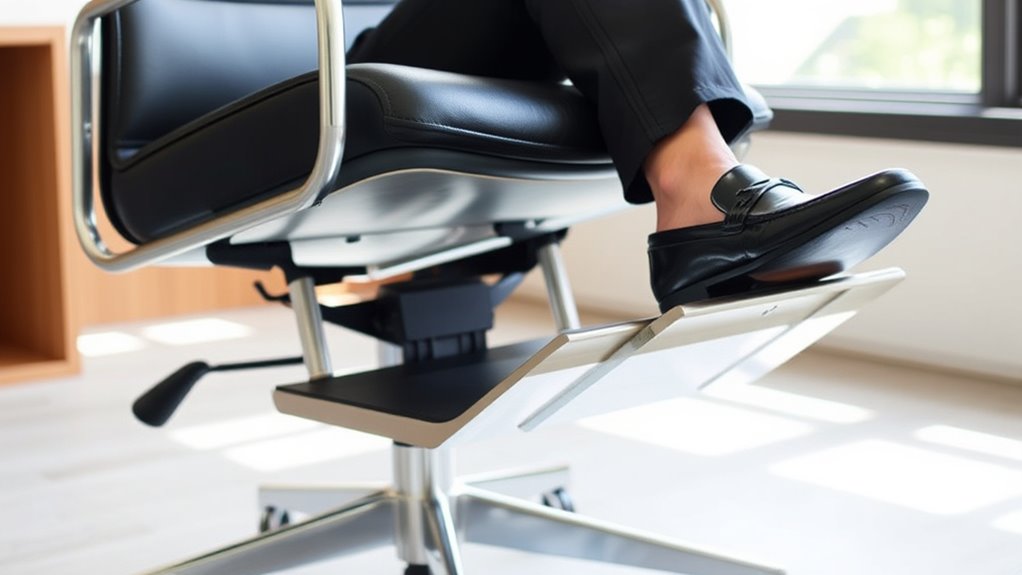

To use a footrest properly, place it so your feet can rest flat with your knees at about a 90° angle, keeping your pelvis in a neutral position. Adjust the height if needed to prevent dangling or elevated feet, which can cause tension. Consistently supporting your feet helps improve posture, reduces back and leg strain, and makes sitting more comfortable. If you want to learn how this simple tool can make a big difference, keep exploring the details.
Key Takeaways
- Adjust the footrest height so your feet rest flat, with knees bent at about 90° for proper posture.
- Position the footrest close enough to support your feet comfortably without stretching or reaching.
- Use the footrest consistently during prolonged sitting to promote even weight distribution and reduce strain.
- Proper setup helps maintain the natural curve of the spine and supports pelvis alignment.
- Investing in a quality, adjustable footrest maximizes ergonomic benefits and encourages better sitting habits.

Using a footrest might seem like a small change, but it can considerably improve your comfort and posture during long periods of sitting. When you position your feet on a footrest, you distribute your weight more evenly, reducing pressure on your lower back and hips. This simple adjustment provides significant ergonomic benefits, helping to minimize discomfort and fatigue over extended sitting sessions. Properly using a footrest encourages better posture correction by aligning your hips, knees, and ankles in a more natural and comfortable position. When your feet are supported, your spine maintains its proper curve, reducing strain on your lumbar region and preventing slouching. Without a footrest, you might find yourself unconsciously shifting or slumping, which leads to poor posture and long-term musculoskeletal issues. A footrest acts as a support that promotes an upright, balanced sitting position, making it easier to stay comfortable and focused throughout your workday.
To maximize these ergonomic benefits, you should adjust the height of your footrest so that your feet rest flat and your knees are roughly at a 90-degree angle. This position ensures that your pelvis remains in a neutral stance, which aids in posture correction. If your feet are dangling or elevated too high, it can cause unnecessary tension in your thighs and lower back. On the other hand, if the footrest is too low, it won’t provide the necessary support, and your posture won’t improve much. When setting up your workspace, consider the height of your chair and desk, ensuring that your feet comfortably reach the footrest without causing your hips to tilt forward or backward. Proper placement helps you maintain a natural lumbar curve, reducing the risk of developing back pain over time.
Using a footrest is also about consistency. Make it a habit to keep your feet supported whenever you’re seated for a prolonged period. This simple act not only enhances your ergonomic benefits but also encourages better habits of posture correction. Remember that your goal is to keep your entire body aligned, which minimizes strain on your muscles and joints. By doing so, you’ll notice decreased fatigue, less discomfort, and improved focus. Investing in a good quality footrest and adjusting it correctly can make a significant difference in your overall comfort and health. It’s a small step that pays off by supporting your body properly and helping you sit smarter every day. Additionally, understanding the core personality traits that influence behavior can help you develop better habits and improve your ergonomic practices over time.
Frequently Asked Questions
Can Footrests Improve Posture During Long Periods of Sitting?
Using a footrest can markedly improve your posture during long sitting periods. It enhances footrest comfort, allowing your feet to rest flat and reduce pressure on your lower back. This promotes better posture correction by encouraging a more natural spine alignment. When your feet are supported, you’re less likely to slouch or experience discomfort, making prolonged sitting more comfortable and helping prevent strain and fatigue.
Are There Specific Footrest Types Suited for Different Body Sizes?
If you’re tall, an adjustable footrest with sturdy materials like foam or wood can perfectly fit your body size. For example, Jane, a tall office worker, switched to an adjustable footrest, improving her comfort and posture. Choose a footrest that matches your height and weight, with adjustable features to customize your support. This guarantees ideal comfort and better ergonomics, no matter your body size.
How Often Should I Replace or Adjust My Footrest?
You should replace or adjust your footrest whenever you notice replacement indicators like cracks, worn padding, or instability. An adjustment schedule depends on your usage, but a good rule is to check it every few months to guarantee proper support and comfort. If your footrest no longer provides adequate support or shows visible damage, it’s time for an upgrade or adjustment to maintain ergonomic benefits.
Can Footrests Help Reduce Lower Back Pain Effectively?
Yes, footrests can effectively reduce lower back pain by supporting your ergonomic foot placement and promoting proper posture. When you use a footrest, you improve leg elevation strategies, which helps relieve pressure on your lower back and spinal discs. By maintaining a healthy, aligned position—feet flat, knees at a right angle, and legs elevated—you encourage better circulation, reduce strain, and support your overall comfort during long hours of sitting.
Are There Ergonomic Guidelines for Using Footrests at Work?
Yes, there are ergonomic guidelines for using footrests at work. You should choose a footrest made from comfortable, supportive materials and adjust its height so your feet rest flat, with knees at a 90-degree angle. Keep your hips slightly higher than your knees for better circulation. Adjust the footrest as needed throughout the day to reduce strain and maintain good posture, promoting comfort and reducing fatigue.
Conclusion
Using a footrest is like giving your legs a gentle hug, providing support and comfort throughout your day. When you position it correctly, you help reduce strain on your lower back and improve circulation, making your workspace feel less like a battlefield. So, don’t overlook this simple tool—think of it as the steady anchor that keeps your posture grounded and your body feeling balanced. Embrace a footrest, and watch your comfort grow like a tree reaching for the sun.