

Get comfort and recovery gear delivered free with Prime
- Fast, free delivery on millions of items
- Prime Video, Amazon Music and more included
- Member-only deals all year
Trick-or-Treating vs. Trunk-or-Treat: The Real Halloween Decision
Every October, families face a deceptively simple question: should the kids do traditional door-to-door trick-or-treating, or head to a trunk-or-treat event where decorated car trunks in a parking lot hand out candy? On the surface both involve costumes and candy, so many parents assume the choice barely matters. It does. The two experiences differ in safety profile, candy volume, time commitment, weather resilience, social texture, and cost — and the right answer depends heavily on your children’s ages, your neighborhood, and how much Halloween chaos you’re willing to manage.

140 Reusable 3D Halloween Bat Decorations in 5 Sizes
- ✔ Material: Waterproof PVC
- ✔ Color: Black
- ✔ Number of pieces: 140
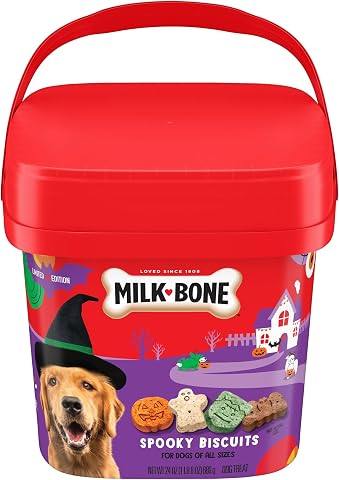
Milk-Bone Spooky Biscuits Halloween Dog Treats, 24 oz. Pail
- ✔ Brand: Milk-Bone
- ✔ Flavor: Spooky Biscuits
- ✔ Net weight: 24 oz.

Rice Krispies Treats Original with Sprinkles, 60 Mini Squares
- ✔ Flavor: Original with sprinkles
- ✔ Package size: 23.2 oz
- ✔ Quantity: 60 bars
The core tension is this: trick-or-treating is the classic experience — bigger, atmospheric, and full of the walking-and-knocking ritual that defines the holiday — but it requires supervision, good neighbors, decent weather, and tolerance for uneven results. Trunk-or-treat is compressed and controlled — a single parking lot, decorated cars, everything wrapped in 90 minutes — but it’s a smaller, more commercial-feeling version of the same activity. Neither is objectively better; one is an event, the other is a tradition.
This guide compares them across the criteria that actually drive the decision: safety, candy haul, convenience, atmosphere, cost, weather resilience, social value, and age fit. By the end, you should know clearly which format fits your family this year — and when the answer is both.
140 Reusable 3D Halloween Bat Decorations in 5 Sizes
Of the three products here, this is the only one that changes the look of your home, and it does so dramatically. With 140 bats across five sizes, a single set can coat a large window, staircase wall, or front porch in a swarming effect that smaller decal packs simply cannot match. The foldable 3D wings are what separate it from flat printed stickers — bending the wings outward creates depth and shadow that reads as genuinely eerie rather than cartoony.The waterproof PVC construction means outdoor use is realistic, not just a marketing claim, and reusability gives it a lifespan the two food products in this lineup can never offer. That said, the adhesive system demands realistic expectations. On smooth, clean, dry surfaces it performs well, but textured walls, dusty exteriors, or spots near heating vents can cause bats to peel or drop. Removal requires heat, and some residue cleanup should be expected — plan on a few minutes of touch-up when the season ends.Compared with the Milk-Bone pail or the Rice Krispies box, this pick demands the most setup effort, but it also delivers the longest-lasting payoff. If your Halloween goal is atmosphere, this is where your money should go first.
Pros:
- 140 bats in five sizes create a dense, layered swarm effect
- Waterproof PVC holds up for outdoor displays
- Reusable across multiple Halloween seasons
- Bendable wings add genuine 3D depth
Cons:
- Adhesion weakens on textured surfaces or near vents
- Removal requires heat and may leave minor residue
Best for: Households that want a dramatic indoor or outdoor spooky display without spending on lights or inflatables
Not ideal for: Renters with heavily textured walls, or anyone wanting a zero-effort, zero-cleanup decoration
Bottom line: The strongest overall pick for anyone decorating on a budget, offering scale and reusability the food options can’t touch.
“The strongest overall pick for anyone decorating on a budget, offering scale and reusability the food options can’t touch.”
Milk-Bone Spooky Biscuits Halloween Dog Treats, 24 oz. Pail
Most Halloween purchases ignore the family member most likely to beg at the door, and this pail exists specifically to fix that. The bat, pumpkin, ghost, and monster shapes bring the seasonal theme into treat form, and the 24 oz. pail holds enough biscuits to last a multi-dog household through the whole season — or to hand out to costumed canine visitors at a pet-friendly event.What makes this a smarter choice than grabbing any festive-looking dog snack is the functional side: the crunchy texture actively helps freshen breath and reduce tartar, and the biscuits are fortified with 12 vitamins and minerals. Compared with the Rice Krispies Treats in our lineup, which are pure indulgence for humans, these actually contribute something to daily nutrition. The tradeoff is the ingredient list: milk, wheat, and sulphites mean owners of allergic or sensitive dogs need to read carefully before buying.Also note that unlike the bat decals, which come back every October, this is a limited-edition seasonal item — if your dog loves it, stock up before the season ends. For dog owners, no other pick in this roundup competes.
Pros:
- Crunchy texture helps freshen breath and reduce tartar buildup
- Fortified with 12 vitamins and minerals
- Four festive Halloween shapes add themed fun
- Large 24 oz. pail lasts the whole season
Cons:
- Limited-edition seasonal availability
- Contains milk, sulphites, and wheat
Best for: Dog owners who want their pet included in Halloween with a themed treat that also supports dental health
Not ideal for: Dogs with milk, wheat, or sulphite sensitivities, or owners seeking a year-round treat
Bottom line: The obvious choice for pet households — the only pick here your dog can actually enjoy.
“The obvious choice for pet households — the only pick here your dog can actually enjoy.”
Rice Krispies Treats Original with Sprinkles, 60 Mini Squares
Sometimes Halloween’s biggest logistical problem isn’t decoration or the dog — it’s feeding a crowd. This 60-count box of individually wrapped mini squares solves that with zero prep, and the festive sprinkle topping gives them enough visual flair to fit a party table without looking like an everyday snack pulled from the pantry.Compared with the bat decals, this pick requires no installation, cleanup, or surface prep — open the box and the treat bowl is stocked. Compared with the Milk-Bone pail, the mini format is actually an advantage for mixed-age gatherings: kids can grab one without overloading on sugar, and portion control is built in. The 23.2 oz. box covers a classroom party or an evening of trick-or-treaters comfortably.The honest limitation is that these are straightforward marshmallow cereal treats — no Halloween shapes, no themed packaging beyond the sprinkles, and they contain marshmallows, which rules them out for some dietary needs. They are also single-use consumables with no reusability, so their value depends entirely on having a crowd to feed. For that specific job, though, nothing else in this lineup works as well.
Pros:
- 60 individually wrapped squares cover a full party or trick-or-treat night
- Mini portions suit kids and portion-conscious snackers
- Sprinkle topping adds festive visual appeal
- Zero preparation or serving effort required
Cons:
- Contains marshmallows, limiting dietary compatibility
- No Halloween-specific shapes or theming
- Single-use with no reusable value
Best for: Party hosts, classroom parents, and anyone stocking a trick-or-treat bowl with a nut-free-friendly, ready-to-serve snack
Not ideal for: Anyone avoiding marshmallows or seeking a themed, shaped Halloween treat
Bottom line: The practical crowd-feeder of the lineup — the right pick when volume and convenience matter more than theme.
“The practical crowd-feeder of the lineup — the right pick when volume and convenience matter more than theme.”
As an Amazon Associate we earn from qualifying purchases.
At a Glance
| Criteria | Traditional Door-to-Door Trick-or-Treating | Trunk-or-Treat Events | Winner |
|---|---|---|---|
| Safety and supervision | Uncontrolled environment; requires active adult supervision and route planning | Contained lot, often with organizers present; easy line-of-sight supervision | B |
| Candy quantity and quality | Typically the largest haul — dozens of houses, full-size bars possible | Smaller, faster haul; candy is uniform but often limited per trunk | A |
| Convenience and time commitment | 2–3+ hours of walking; route depends on neighborhood participation | 60–90 minutes start to finish; scheduled time, parking adjacent | B |
| Atmosphere and tradition | The authentic ritual: dark streets, decorations, knocking on doors | Festive but synthetic — closer to a fair than a haunted street | A |
| Cost to participate | Free or near-free; maybe a flashlight and candy for your own bowl | Often free, but sometimes a per-family fee or candy donation expected | Tie |
| Weather resilience | Rain or cold can cancel the night entirely | Usually moves indoors or to a rain date with little effort | B |
| Age suitability | Sweet spot for ages ~6–12; too far for toddlers, too young-feeling for teens | Excellent for toddlers and preschoolers; often loses appeal after age 10 | Depends |
| Social and community value | Builds neighborhood familiarity; ad hoc friend meetups | Strengthens school, church, or community-group ties | Depends |
Key Differences
Key Differences at a Glance
The first big difference is control. Trick-or-treating sends your child into an unscripted environment: traffic, dark sidewalks, strangers’ doorsteps, unfamiliar dogs, and candy you haven’t vetted. Most of it is perfectly safe, and millions of families do it without incident every year, but the supervision burden sits entirely on you. Trunk-or-treat confines the whole activity to a parking lot, typically run by a school, church, employer, or community group, with a defined perimeter, a fixed start and end time, and other adults visibly present. For parents of small children or anyone in an area where door-to-door participation has thinned out, that containment is the entire appeal.
The second difference is scale of reward. A good trick-or-treat route — a dense neighborhood where most houses participate — produces a genuinely large candy haul, often with the coveted full-size bars from enthusiastic neighbors. Trunk-or-treat candy is rationed by design: organizers ask each trunk to bring a set amount, and kids typically get one or two pieces per car. A 40-trunk event yields a modest bag, not a pillowcase. If candy volume is the point for your kids, traditional wins comfortably.
The third difference is what the experience feels like. Trick-or-treating is Halloween as a ritual: cold air, jack-o’-lanterns, the excitement of not knowing which house pays out big. Trunk-or-treat is Halloween as an event: efficient, decorated, social for the parents, over in under two hours. Families who love the holiday for its atmosphere tend to find trunk-or-treat slightly hollow; families who dread two hours of walking in the cold find it a relief. Neither read is wrong — it’s a question of what you want the night to be.
Detailed Comparison
Safety and Supervision (Trunk-or-Treat Events wins — moderate)
Trick-or-treating is safe for the overwhelming majority of families, but its risks are structural: vehicle traffic on dark streets, long distances between houses, and the simple fact that you cannot see every child at every moment if you’re supervising a group. It demands an engaged adult, a planned route, reflective gear or glow sticks, and a candy inspection afterward. Trunk-or-treat removes most of these variables: no road crossings, one contained space, scheduled hours, and usually a dozen other parents within arm’s reach. For toddlers who dart, kids with special needs who do better with structure, or neighborhoods where participation is sparse and routes require crossing busy streets, trunk-or-treat is clearly safer. For school-age kids in a traditional subdivision, the safety gap narrows to near irrelevance — walking your own block with a parent is about as low-risk as childhood gets.
Candy Quantity and Quality (Traditional Door-to-Door Trick-or-Treating wins — major)
This is trick-or-treating’s decisive advantage. A dense neighborhood on a weeknight can yield candy from 40 to 60 houses in two hours, and the variety — homemade popcorn balls from one house, king-size bars from the house that always over-delivers, the dreaded raisins — is part of the fun. Trunk-or-treat deliberately rations: organizers cap handouts so supply lasts, so a child might collect 20 to 30 pieces total. The candy itself skews fun-size and uniform. Kids notice. A ten-year-old comparing pillowcases with a cousin who went door-to-door will feel shortchanged; a four-year-old will not care. If the candy haul is the main event for your child, trunk-or-treat loses this criterion by a wide margin.
Convenience and Time Commitment (Trunk-or-Treat Events wins — major)
Trick-or-treating consumes the evening: getting into costume, walking two to three hours, managing the post-haul inventory, and getting sugared-up kids to bed well past bedtime. Trunk-or-treat runs on a schedule, typically 60 to 90 minutes, often scheduled a few days before Halloween itself — which means it doesn’t even consume the holiday night. You park next to the action, kids make a loop of the lot, and you’re home before dark or shortly after. For working parents, families with multiple kids on different schedules, or anyone who finds the full trick-or-treat marathon exhausting, this convenience is transformative. The counter-cost is that many trunk-or-treat events ask participating families to decorate a trunk and supply candy — so if you’re a participant rather than just an attendee, your prep time may exceed what a simple door-to-door route requires.
Atmosphere and Tradition (Traditional Door-to-Door Trick-or-Treating wins — major)
There is no replicating the feel of a real neighborhood on Halloween night: porches lit orange, fog machines running, packs of costumed kids moving down the block, the genuine uncertainty of which houses are handing out candy. Trunk-or-treat, for all its decorations, is a parking lot with a bouncy castle. It is cheerful and bright — literally, since lots are well-lit — but bright is the opposite of spooky. Parents who grew up trick-or-treating often feel the loss of ritual acutely; kids under about seven mostly don’t, because for them any event where adults hand them candy in costume is pure magic. If you value Halloween as a tradition rather than an activity, this is the criterion that decides the whole comparison in favor of door-to-door.
Cost to Participate (minor difference)
Both are cheap, and the difference rarely matters. Trick-or-treating is effectively free — you’re spending on the costume either way, and handing out candy at your own door is optional. Trunk-or-treat is also usually free to attend, but some events charge a small per-family fee or require each family to bring a candy donation and trunk decorations, which can add $20 to $40 in candy and supplies if you’re hosting a trunk. If you’re only attending, costs are a wash. If you’re hosting a trunk, trunk-or-treat is modestly more expensive — but you’re paying for the convenience above, not the candy.
Weather Resilience (Trunk-or-Treat Events wins — moderate)
A cold rain can kill a trick-or-treat night outright — few things are more demoralizing than a soaked Elsa dragging a half-empty bag down an empty street. Trunk-or-treat events usually have indoor fallbacks (school gyms, church halls) or rain dates, and even in bad weather the walk from car to car is ten seconds instead of ten blocks. If you live somewhere with genuinely volatile late-October weather, this resilience is worth real weight. In mild climates, it’s a non-factor.
Age Suitability (major difference)
The formats have almost opposite age curves. Trunk-or-treat is ideal for roughly ages two to six: short distances, no scary dark houses, instant gratification, and it’s over before a toddler melts down. Trick-or-treating peaks from about six to twelve, when kids have the stamina, the street sense, and the social thrill of knocking on strangers’ doors with friends. For teens, neither is a great fit on its own — trunk-or-treat feels babyish, and trick-or-treating gets socially awkward — though teens often thrive as trunk decorators or as younger siblings’ escorts. Match the format to the age and this decision mostly makes itself.
Traditional Door-to-Door Trick-or-Treating: Pros and Cons
Pros:
- Largest candy haul by far, with variety and the occasional full-size bar
- The authentic Halloween ritual — dark streets, decorated houses, genuine atmosphere
- Free, and builds familiarity with your actual neighbors
- Scales well for elementary-age kids walking with friends
- Teaches street skills, stamina, and the fun of mild spooky uncertainty
Cons:
- Requires 2–3 hours of active adult supervision in the dark
- Weather-dependent; rain or cold can ruin the night
- Quality depends entirely on neighborhood participation — sparse routes disappoint
- Traffic, dark sidewalks, and unvetted candy demand vigilance
- Late bedtime and sugar crash are near-guaranteed
Trunk-or-Treat Events: Pros and Cons
Pros:
- Contained, well-lit, easy-to-supervise environment — ideal for toddlers and preschoolers
- 60–90 minutes on a schedule, often before Halloween night itself
- Weather-proof or easily rescheduled; indoor fallbacks common
- Connects you to your school, church, or community group
- Great for families in areas with low door-to-door participation
Cons:
- Smaller, rationed candy haul — older kids will notice the difference
- Parking-lot atmosphere; bright and cheerful rather than spooky
- Hosting a trunk adds prep time and candy/decoration costs
- Usually loses appeal for kids over about ten
- Scheduled events can crowd and involve lines at popular trunks
Who Should Choose What
Choose Traditional Door-to-Door Trick-or-Treating if:
- Your kids are roughly 6–12 and have the stamina and street sense for two hours of walking
- You live in a neighborhood with strong Halloween participation
- You value the tradition and atmosphere of the real thing more than convenience
- Your kids measure the night by the size of the candy bag
Choose Trunk-or-Treat Events if:
- You have toddlers or preschoolers who can’t manage a long route
- Your neighborhood is quiet, rural, or light on trick-or-treat participation
- You’re a working parent who needs a bounded, scheduled, weather-safe event
- Your trunk-or-treat is run by a group you’re already part of — school, church, or daycare — and the social side matters to you
Skip both if: Your kids are teens who find both formats beneath them — put them to work as trunk decorators, party hosts, or paid escort-and-safety buddies for younger neighbors instead.
Value for Money
Which Offers Better Value?
Since both options are free or nearly free, value here is about time and experience rather than money. Trick-or-treating gives you the most Halloween per hour invested if your neighborhood participates: bigger haul, better atmosphere, real tradition, at a cost of a long evening and supervision energy. Trunk-or-treat gives you the most Halloween per unit of parental effort: a complete experience in 90 minutes, safe and weather-proof, at the cost of scale and atmosphere. The only scenario where money genuinely enters the calculation is if you’re hosting a trunk — expect $20 to $40 in candy and decorations — and in that case you’re paying for the community contribution and the reserved spot in the event, not for candy volume. Paying a per-family admission fee (some events charge $5 to $15) is reasonable only if the event adds extras like games, food, or haunted attractions; for candy alone, it’s a poor trade against a free neighborhood route.
Final Verdict
For most families with kids between six and twelve in a reasonably active neighborhood, traditional trick-or-treating is the better choice — it delivers more candy, more atmosphere, and the actual tradition, and the safety concerns are manageable with an engaged adult. Trunk-or-treat is the better choice — decisively so — for families with toddlers and preschoolers, families in low-participation areas, and parents whose schedules or energy can’t absorb a three-hour Halloween night. The single biggest deciding factor is age: under six, go trunk-or-treat; six to twelve, go door-to-door. And because many trunk-or-treat events happen before October 31st, the strongest answer of all may be both — trunk-or-treat on the weekend as the low-stakes warm-up, and the real thing on Halloween night as the main event. That combination is the closest thing to a no-compromise Halloween, and it costs you nothing but one extra costume-wearing.
Frequently Asked Questions
Can we do both trunk-or-treat and regular trick-or-treating?
Yes, and many families do — most trunk-or-treat events are scheduled a few days before Halloween, so they rarely conflict. Doing both is often the best-value option: trunk-or-treat as a convenient warm-up, trick-or-treating as the main event.
Is trunk-or-treat candy safer than trick-or-treat candy?
Slightly, in practice. Candy from a trunk-or-treat comes from known community members and is handed out in the open, which reduces (already vanishingly rare) tampering concerns. Still inspect all candy in both cases — discard anything unwrapped or homemade unless you know the giver.
What if our neighborhood doesn’t participate in Halloween?
Sparse participation is the strongest argument for trunk-or-treat — a two-block route with four lit houses is a disappointing night. Alternatively, drive to a nearby dense neighborhood, which is a time-honored workaround, but check local guidance, as some communities discourage out-of-area trick-or-treating.
Is my child too old for trunk-or-treat?
Roughly, yes past age ten. Most trunk-or-treat crowds skew preschool through early elementary, and older kids often feel out of place. Kids eleven and up are better served by door-to-door trick-or-treating with friends, or by helping run a trunk, which many events welcome.
Do I have to decorate a trunk and bring candy to attend a trunk-or-treat?
Usually not — most events separate attendees from trunk hosts. But some school- or church-run events expect each participating family to contribute candy or a decorated trunk, and a few charge a small fee. Check the event details before assuming you can simply show up.
Halloween Picks
halloween
As an affiliate, we earn on qualifying purchases.