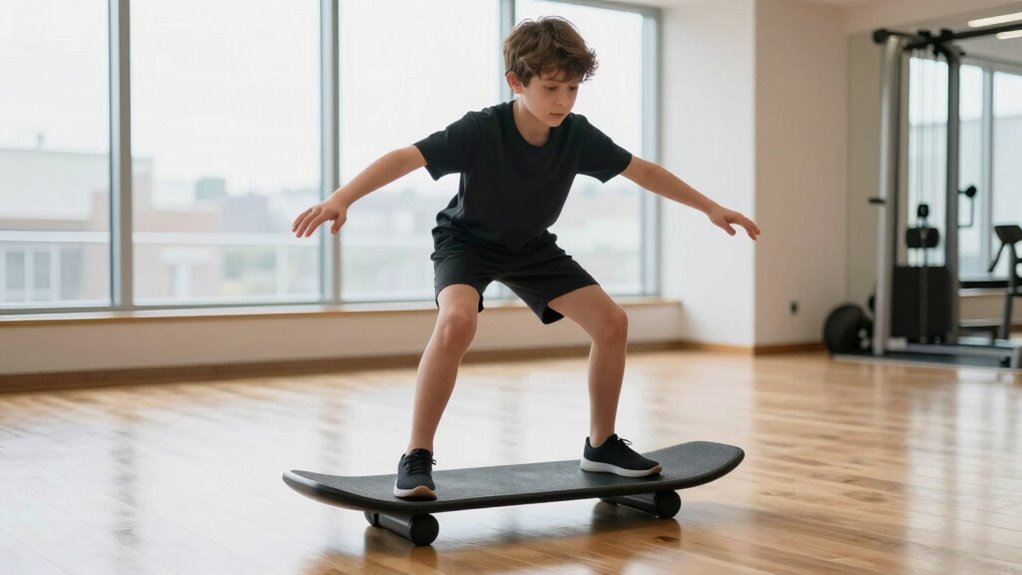

When using a balance board for the first time, focus on your footing and keep your feet shoulder-width apart with knees slightly bent. Engage your core muscles and stay aware of your body’s position to avoid leaning too far forward or backward. Maintain a proper stance, keep your hips level, and move slowly to build stability. With patience and consistent effort, you’ll improve your balance skills—keep exploring for more tips to get started safely.
Key Takeaways
- Begin with a stable, shoulder-width stance and keep knees slightly bent for better balance.
- Engage your core muscles to maintain stability and avoid leaning too far forward or backward.
- Focus on body awareness and small adjustments to prevent overcorrecting and falling.
- Practice gradually, monitoring progress and staying patient to develop proper technique.
- Keep arms relaxed and centered to aid in maintaining balance and control.

Trying a balance board for the first time can be both exciting and challenging. As you step onto the board, your immediate goal is to find your footing and prevent unnecessary falls. The key to staying upright lies in your ability to engage your core muscles and adopt a proper stance. Your core acts as the foundation for maintaining balance, so focus on tightening your abdominal muscles and keeping your spine straight. This helps stabilize your entire body and gives you more control over your movements.
Starting with the right stance is crucial. Position your feet shoulder-width apart, with your knees slightly bent. Keep your hips level and aligned over your ankles, avoiding leaning too far forward or backward. This proper stance keeps your center of gravity over the board, making it easier to balance. As you adjust, pay attention to your arms—spread them out slightly for added stability, but avoid stiffening them. Keep your hands relaxed and ready to react, which allows for quicker adjustments if you start to wobble. Incorporating body awareness can help you better sense your position and improve your reactions. Additionally, focusing on your balance techniques can enhance your overall stability on the board. Developing a mindful approach to these techniques can also help you adapt more quickly to different surfaces and conditions.
Maintain a balanced stance with feet shoulder-width apart, knees slightly bent, and relaxed arms for stability and quick adjustments.
Once you’re on the board, your focus should be on continuous core engagement. It’s tempting to just stand there and hope for the best, but actively using your core muscles makes a huge difference in your ability to stay balanced. Think of your core as a natural stabilizer, constantly adjusting to small shifts in the board. Every time you feel yourself tipping, tighten your abdominal muscles and shift your weight slightly to counteract the movement. This active engagement helps you develop better control and prevents you from overcorrecting, which can throw you off balance faster.
Additionally, understanding the importance of system monitoring can help you track your progress and identify areas for improvement as you develop your skills. This awareness of your body’s responses and adjustments is similar to how contrast ratio impacts the perceived sharpness and detail in images, helping you fine-tune your technique for better balance. Staying mindful of your breathing can also enhance your focus and stability during practice. Remember, patience and consistent practice are key to building confidence and improving your balance skills, so don’t rush the process.
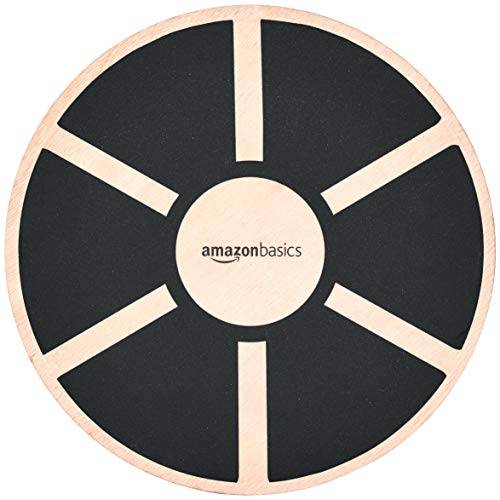
Amazon Basics Wood Wobble Balance Trainer Board, Slip Resistant, for Exercise and Core Strength, 265 lb Weight Capacity, Black
- Color: Black
- Purpose: Improve core strength and balance
- Exercise Compatibility: Suitable for various workouts
As an affiliate, we earn on qualifying purchases.
As an affiliate, we earn on qualifying purchases.
Frequently Asked Questions
What Is the Ideal Age to Start Using a Balance Board?
You can start using a balance board around age 5 or when your child’s balance and coordination improve. Age considerations are important because younger kids might find it challenging or unsafe without supervision. Using a balance board early offers developmental benefits like improved posture, core strength, and stability. Always supervise your child during use, and choose age-appropriate, sturdy boards to guarantee safety and maximize benefits.
Can Balance Boards Help Improve Specific Sports Performance?
Like a seasoned athlete refining their craft, you can use a balance board to boost your sports performance by enhancing core stability and injury prevention. It challenges your balance and coordination, translating into better agility and control on the field or court. Incorporating balance board exercises into your routine helps you develop the stability needed for sports-specific movements, reducing the risk of injuries while sharpening skills, much like a master honing their technique.
How Long Should I Practice on the Balance Board Daily?
You should practice on the balance board for about 10-15 minutes daily. Focus on engaging your core stability and maintaining proper muscle engagement to build strength and improve balance. As you get more comfortable, you can gradually increase your practice time. Remember, consistency is key—short daily sessions will help you develop better control and prevent injury, making your workouts more effective over time.
Are There Different Types of Balance Boards for Beginners?
Your question is as essential as a lighthouse guiding ships through fog. Yes, there are different types of balance boards for beginners, featuring beginner-friendly designs like wider decks and softer surfaces that make balancing easier. These boards help you develop stability without frustration. Look for options like wobble boards or rocker boards, which are perfect for building confidence and skills before progressing to more advanced types.
What Safety Gear Is Recommended for First-Time Users?
For your safety, always wear protective gear like a helmet, wrist guards, and knee pads when starting out on a balance board. Safety tips include practicing in a clear, clutter-free space and starting near a wall or sturdy support for balance. Using proper gear helps prevent injuries, and following safety tips guarantees you build confidence gradually while enjoying your workout safely.
Amazon Basics Wood Wobble Balance Trainer Board, Slip Resistant, for Exercise and Core Strength, 265 lb Weight Capacity, Black
- Color: Black
- Purpose: Improve core strength and balance
- Exercise Compatibility: Suitable for various workouts
As an affiliate, we earn on qualifying purchases.
As an affiliate, we earn on qualifying purchases.
Conclusion
So, now that you’re ready to step onto that balance board, remember—you’re about to gain access to skills that can turn you into a stability superhero! Start slow, follow the tips, and keep practicing. Don’t let a wobbly moment scare you away—every expert was once a beginner wobbling like a leaf in the wind. With patience and persistence, you’ll conquer that board faster than you imagined. Get ready to shock yourself with how quickly you improve!
Amazon Basics Wood Wobble Balance Trainer Board, Slip Resistant, for Exercise and Core Strength, 265 lb Weight Capacity, Black
- Color: Black
- Purpose: Improve core strength and balance
- Exercise Compatibility: Suitable for various workouts
As an affiliate, we earn on qualifying purchases.
As an affiliate, we earn on qualifying purchases.